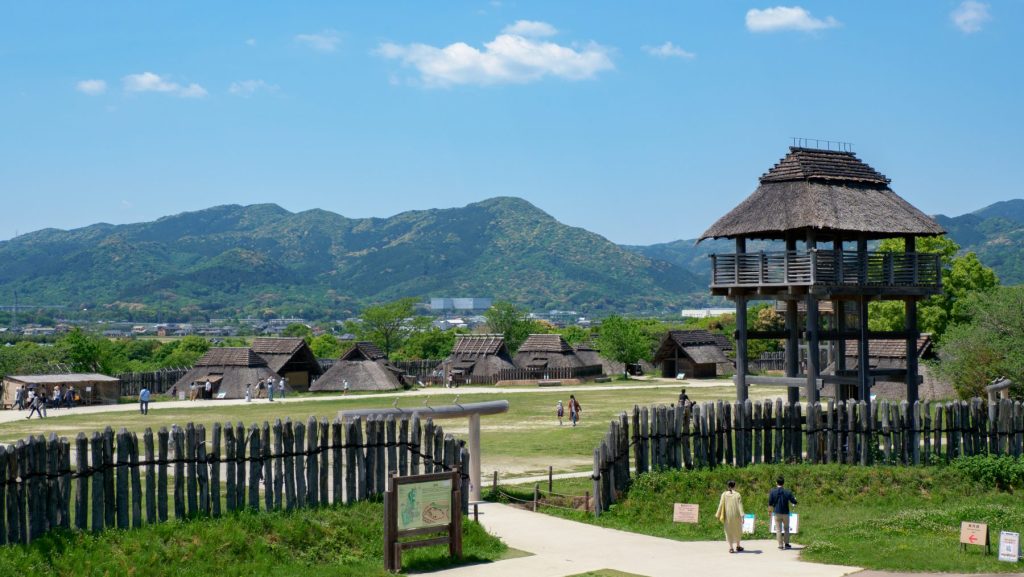
Yoshinogari Ruins by Bike (Oshanpo)
The nearest station to Yoshinogari Park is JR Yoshinogari Park Station.
I headed to the ruins by bicycle from the station. It takes about 20 minutes on foot, but only about 8 minutes by bike. 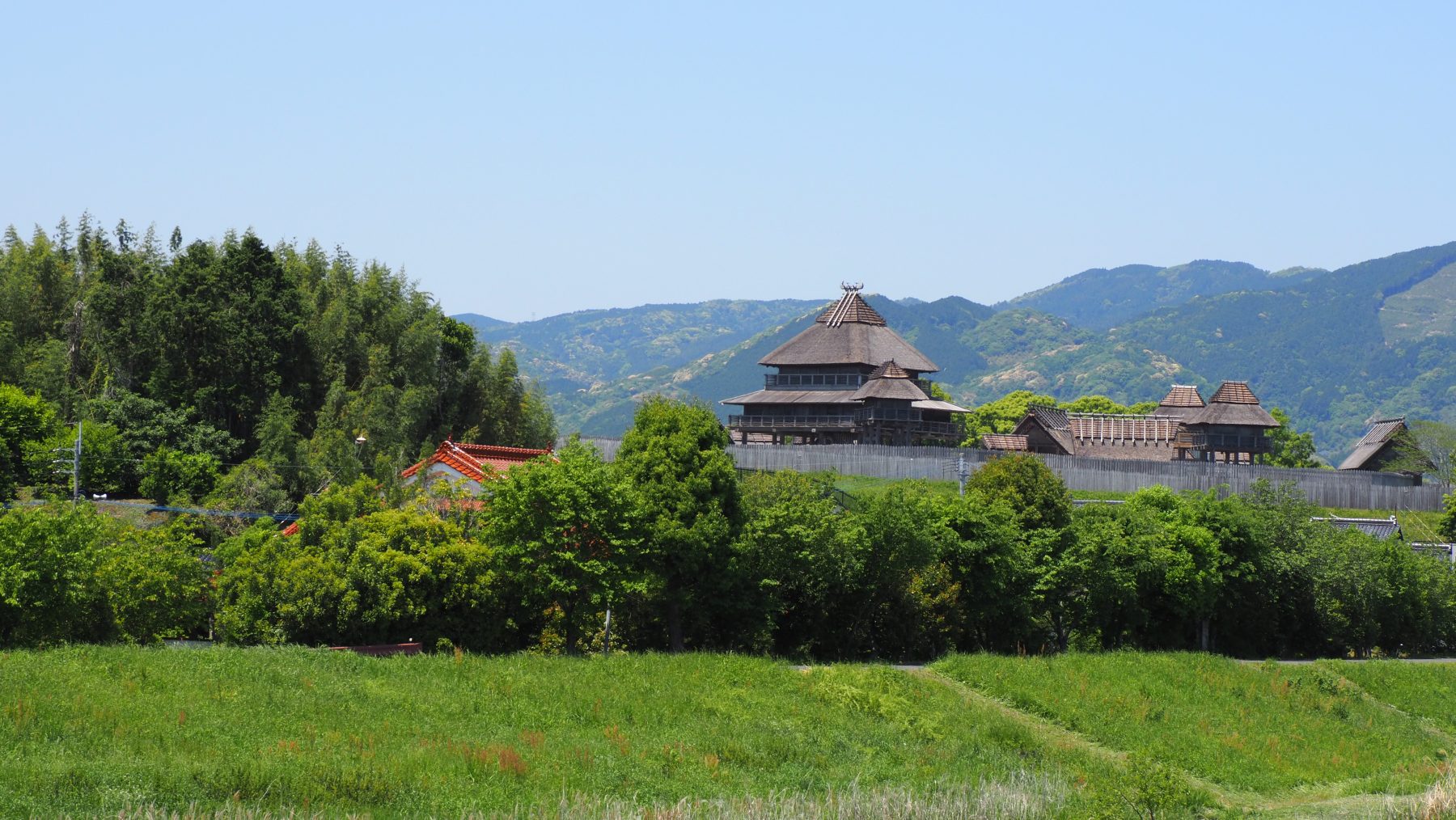
Renting a bicycle near the station makes getting to the ruins smooth and easy.
It’s a bit of a distance on foot, but by bike you can feel the wind and arrive in no time.This is the entrance to the Yoshinogari Ruins.
This moment is the most exciting. The structure on the left in the foreground is the watchtower (monomiyagura). This was where the ruling class lived. From the top of this ten-plus-meter-tall watchtower, you can overlook the entire park. 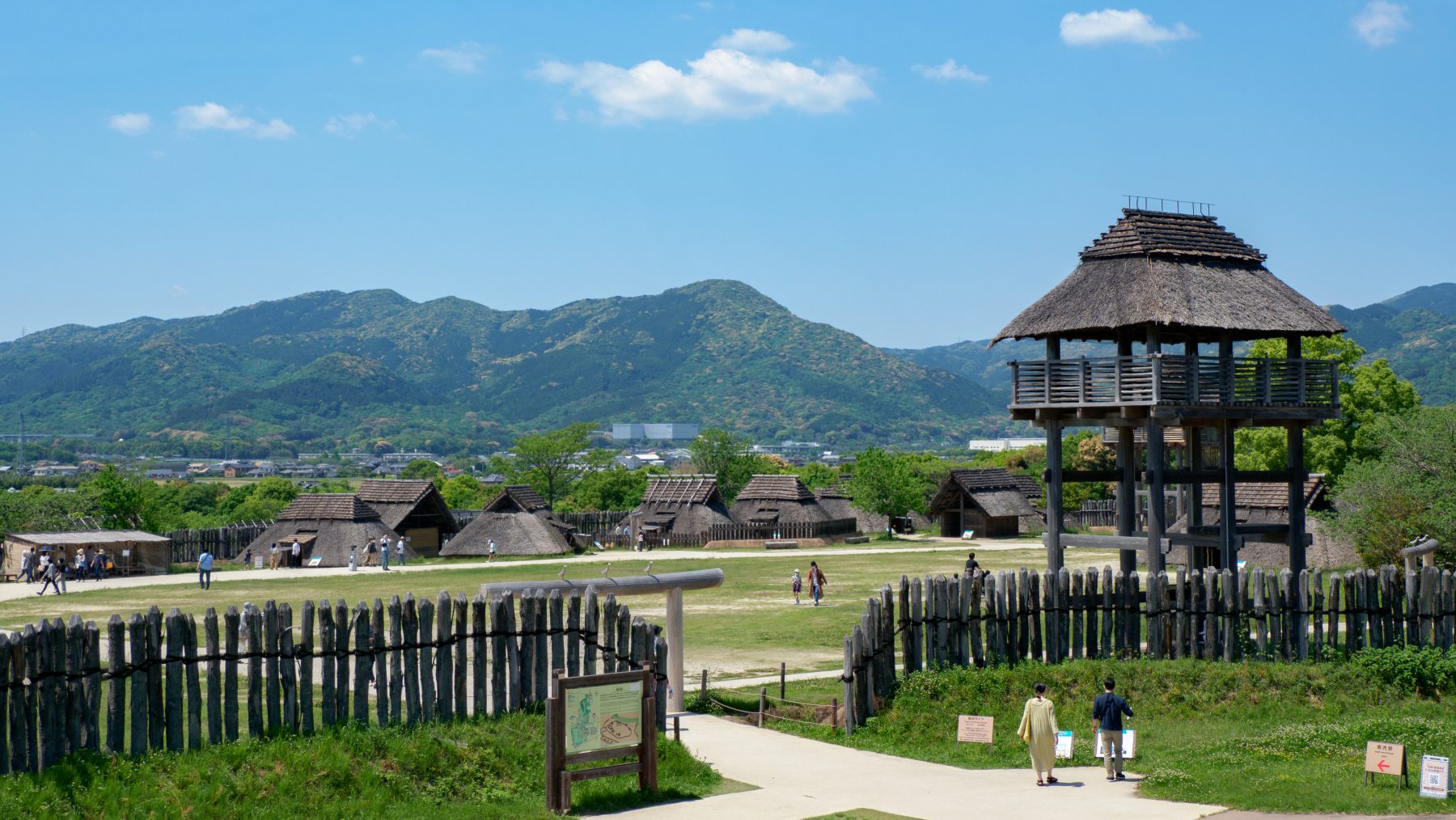
This is a “pit dwelling” (tateana-shiki jukyo), a typical house style from the Yayoi period.
By digging into the ground, they gained an insulating effect, making it cool in summer and warm in winter.
Well… it still looks pretty cold though.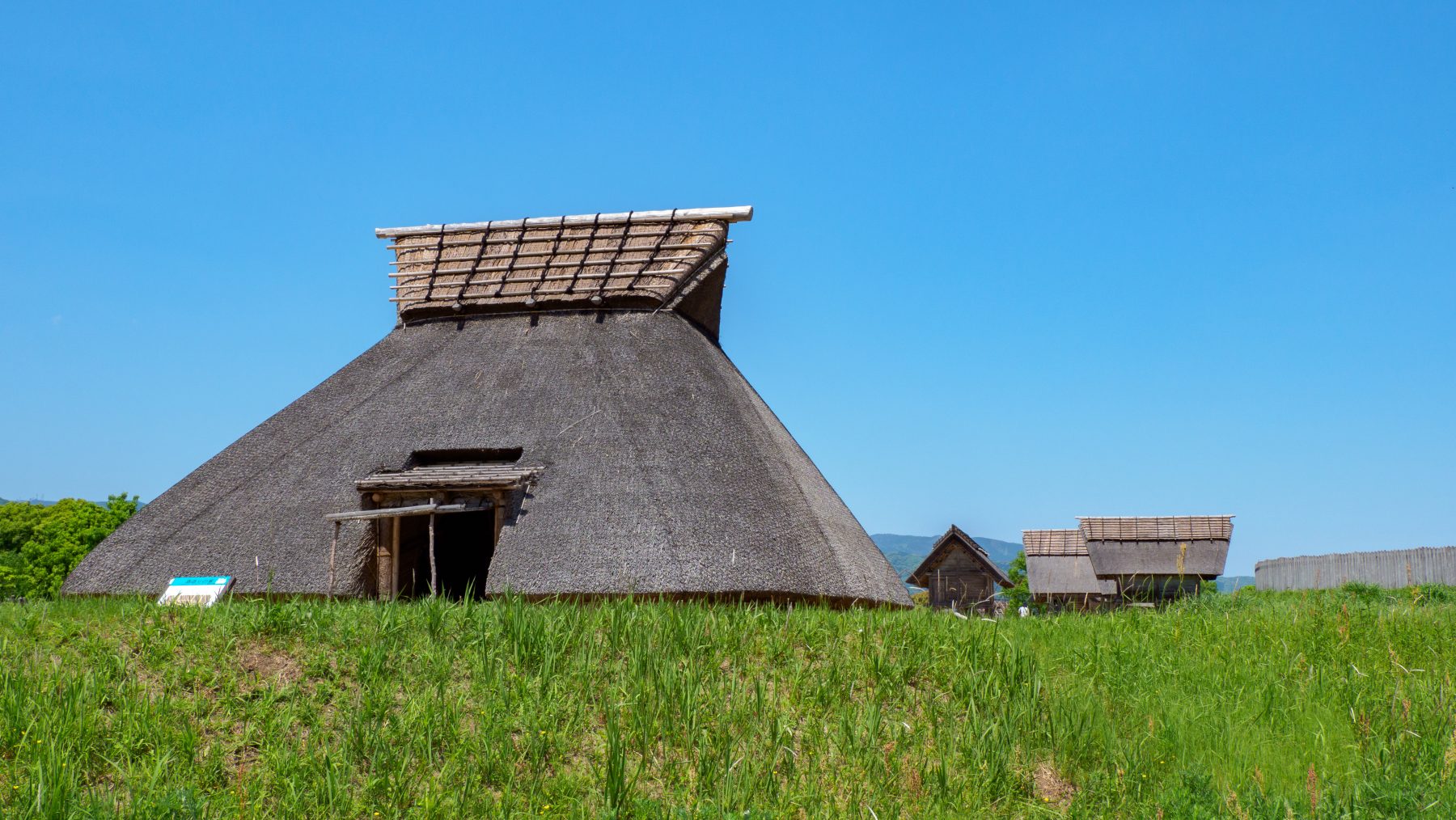
Here is a raised-floor granary (takayuka souko). Moisture protection: By elevating the floor high above the ground, they prevented moisture from rising and kept the grain from spoiling.
Rat guard: A board (nezumigaeshi) was fitted on the upper part of the pillars to stop rats and other pests from climbing up and getting inside.
Ventilation: Because the building is raised off the ground, air flows through well, making it suitable for long-term storage.
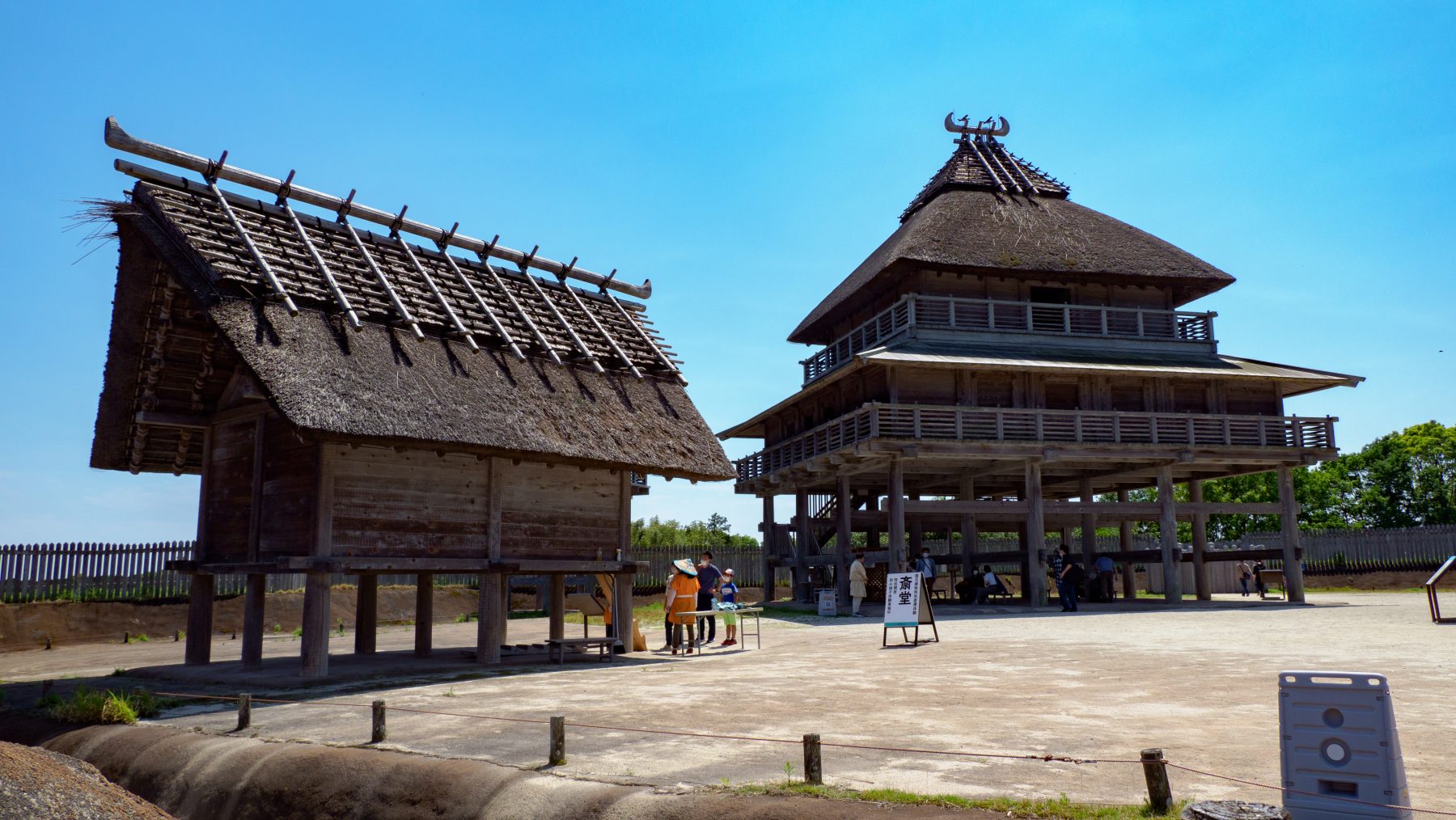
Further back, you can see the Main Ritual Hall (Shusaiden).
It is a huge three-story raised-floor building and served as a symbol of authority visible from anywhere in the settlement. Political floor (2nd floor): Leaders from surrounding villages gathered here to discuss important matters.
Ritual floor (3rd floor): The chief priestess (or shaman) is thought to have performed ceremonies to listen to the voices of ancestors and gods, and to decide on critical issues that could not be resolved in meetings.
By the way, there is a theory that Himiko lived here, but I personally support the “Kinai theory,” which centers on the Makimuku Ruins in Nara Prefecture.