It takes about 1 hour and 40 minutes by train from Tokyo.
In Kiryu City, Gunma Prefecture, there is a secretly popular “Instagram-worthy holy site.”Its name is Hotokuji Temple (pronounced: Hōtokuji).
The moment you step into the grounds, you can’t help but think, “Wait… this is really a temple, right?” — it’s filled with a huge number of colorful Japanese umbrellas.
Kiryu — The Town of Silk Weaving Trivia
The nearest stations are JR Kiryu Station or Watarase Keikoku Railway’s Aioi Station.
From there, it’s about a 10-minute bus or taxi ride.
When you get off at the station…
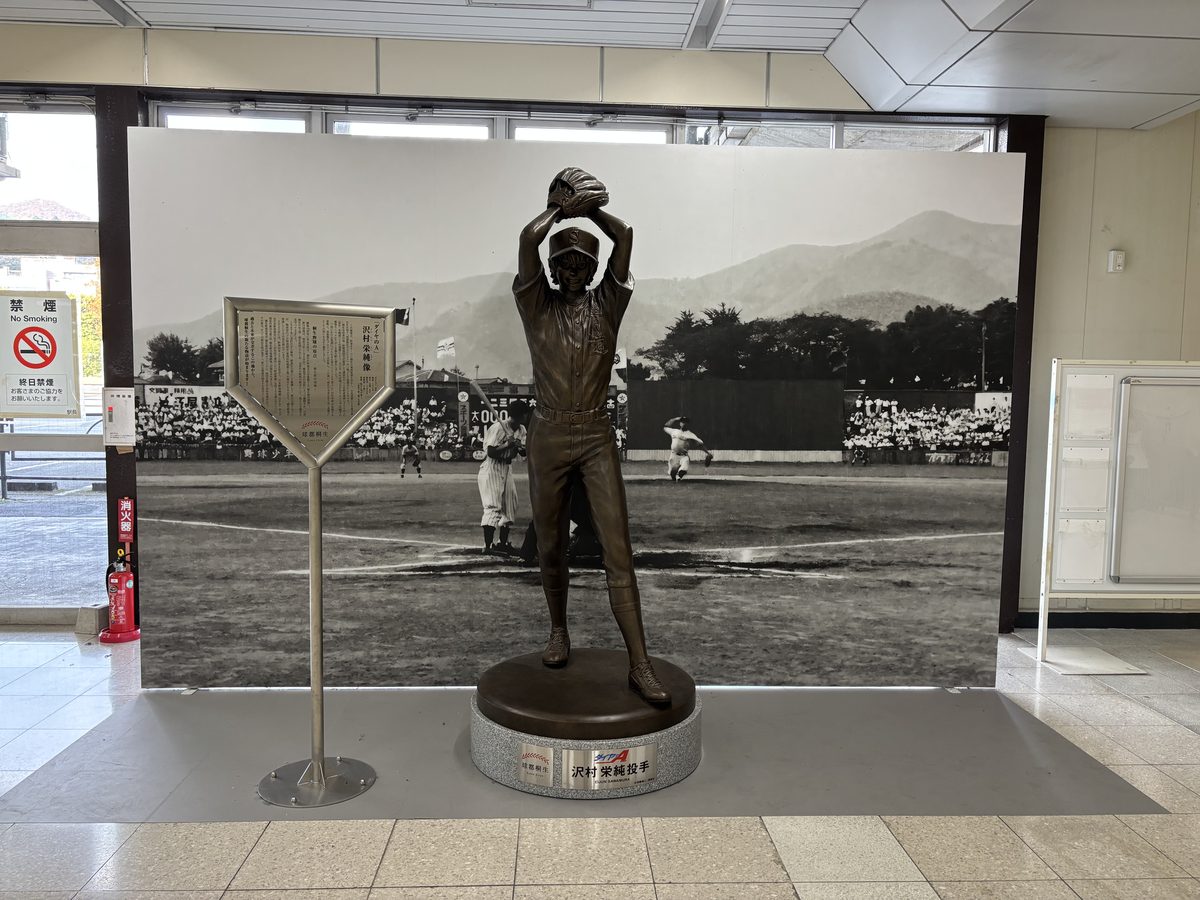
you’ll find a monument of Eijun Sawamura, the protagonist of the popular baseball manga Diamond no Ace.
For a second I thought Kiryu was the hometown of the real-life pitcher Eiji Sawamura — it’s confusing!
Eiji Sawamura was actually from Ise City in Mie Prefecture.
The manga character Eijun Sawamura is modeled after him.
 Have you ever heard the phrase “Nishi no Nishijin, Higashi no Kiryu” (Nishijin in the west, Kiryu in the east)?
Kiryu Meisen (a type of flat-woven silk fabric) has been a silk weaving production center since the Muromachi period, and its quality is considered on par with Kyoto’s Nishijin-ori.
Even today, you can see old weaving factories with sawtooth roofs still standing in the town. Just walking around gives you a time-slip feeling.
It is one of the Five Major Meisen of the Kanto region (Kiryu Meisen, Chichibu Meisen, Isesaki Meisen, Ashikaga Meisen, Hachioji Meisen).
The Autumn Leaves at Hotokuji Were the Real Deal
Get off at the bus stop “Hotokuji Iriguchi” (Hotokuji Temple Entrance). From there, it’s about a 30-minute walk.
Even the entrance is stylish.
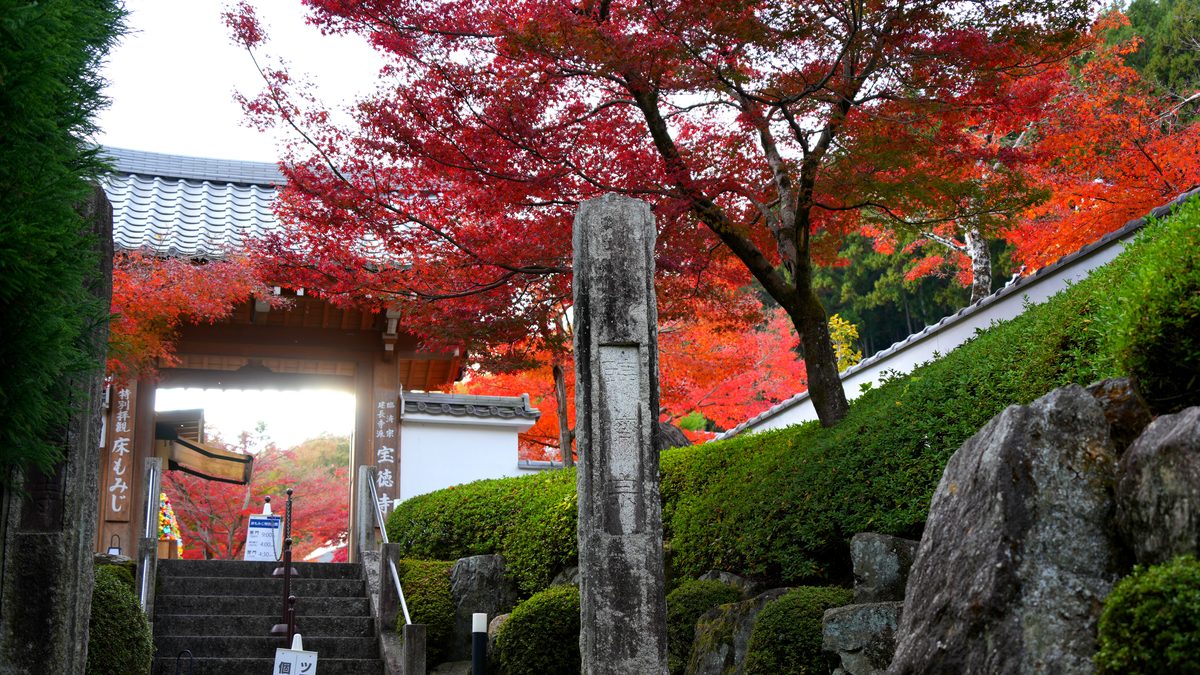
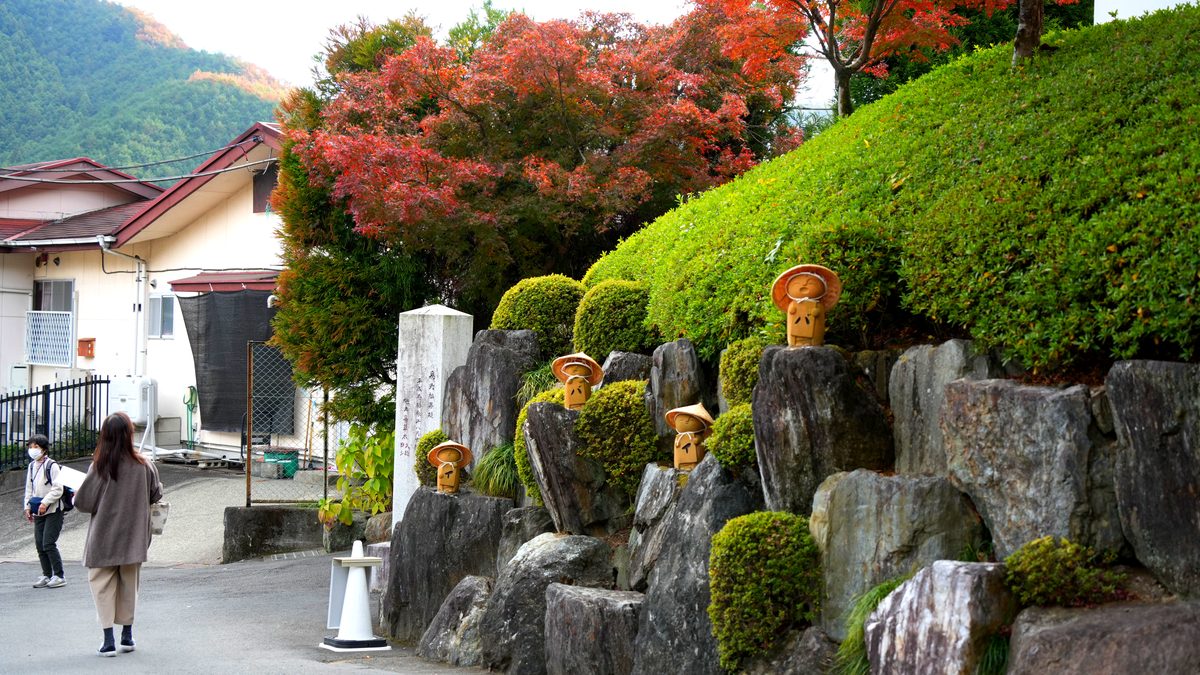
Once you pass through the gate, a bright red tunnel of autumn leaves spreads out before your eyes.
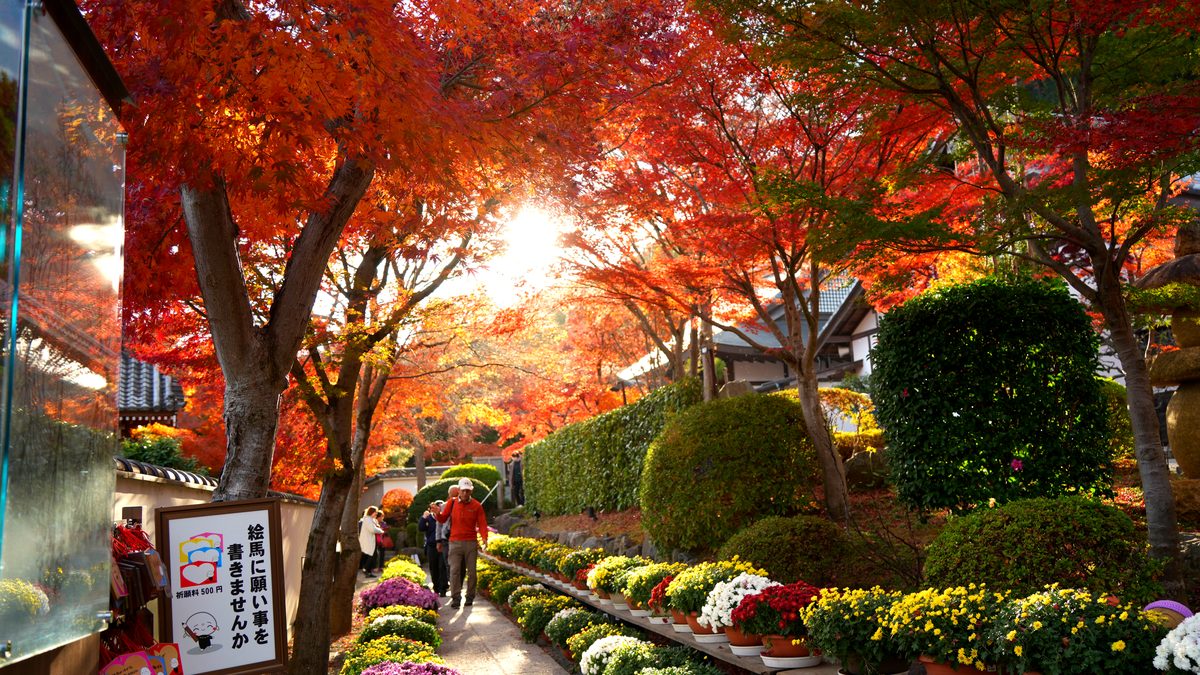 The temple grounds show thoughtful effort.
You can tell that temples that attract many visitors don’t skimp on these small details.
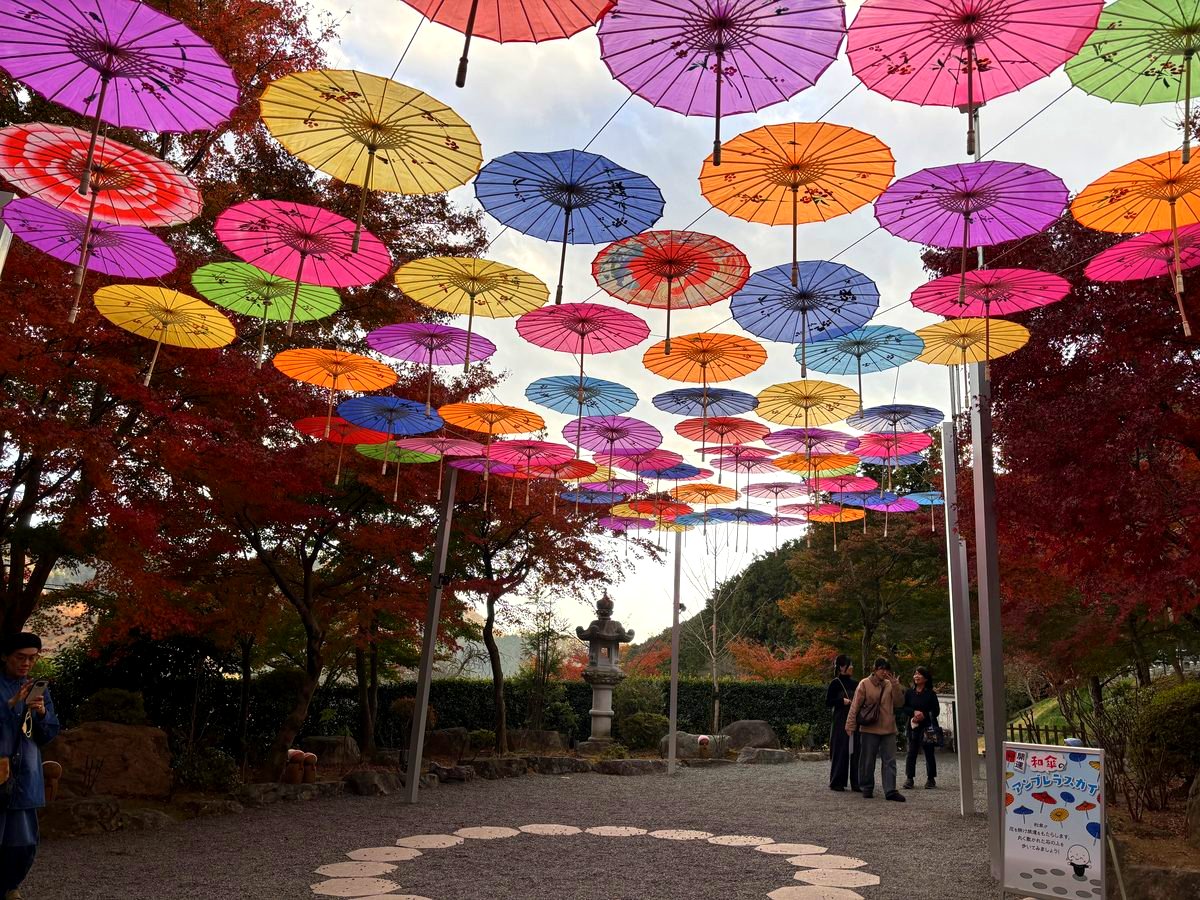
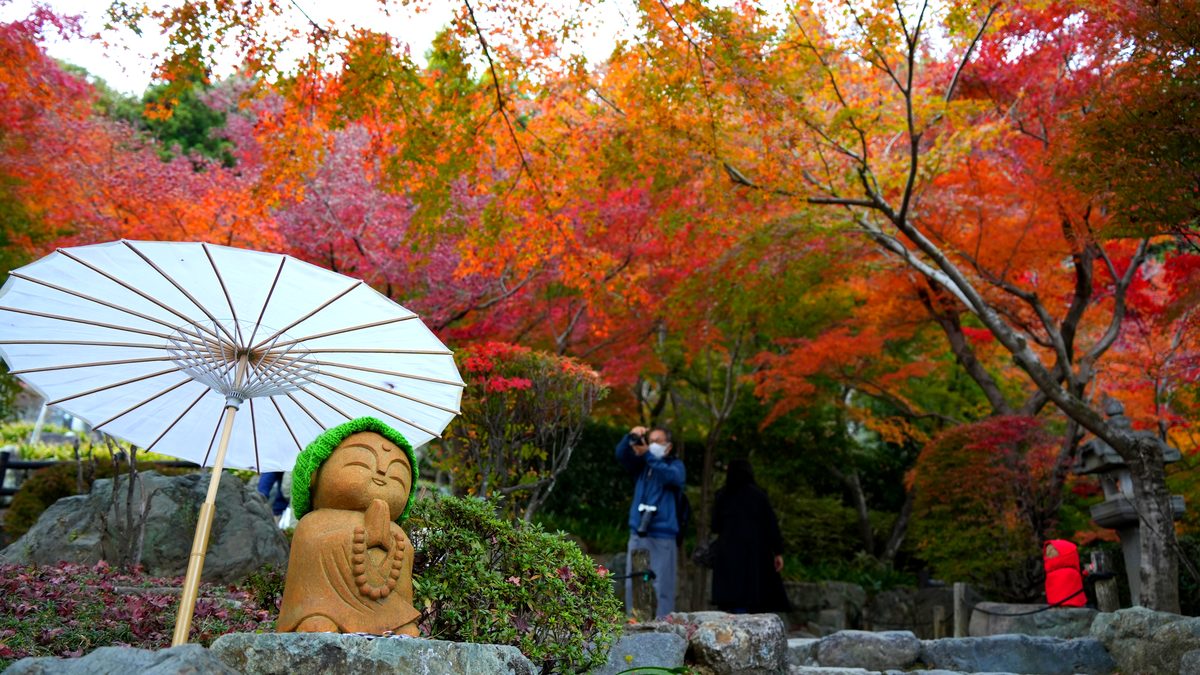 Another highlight in the grounds is the colorful installation of traditional Japanese umbrellas (bangasa).
Umbrellas, umbrellas, and more umbrellas fill the sky above.
The colors harmonize beautifully with the autumn leaves.
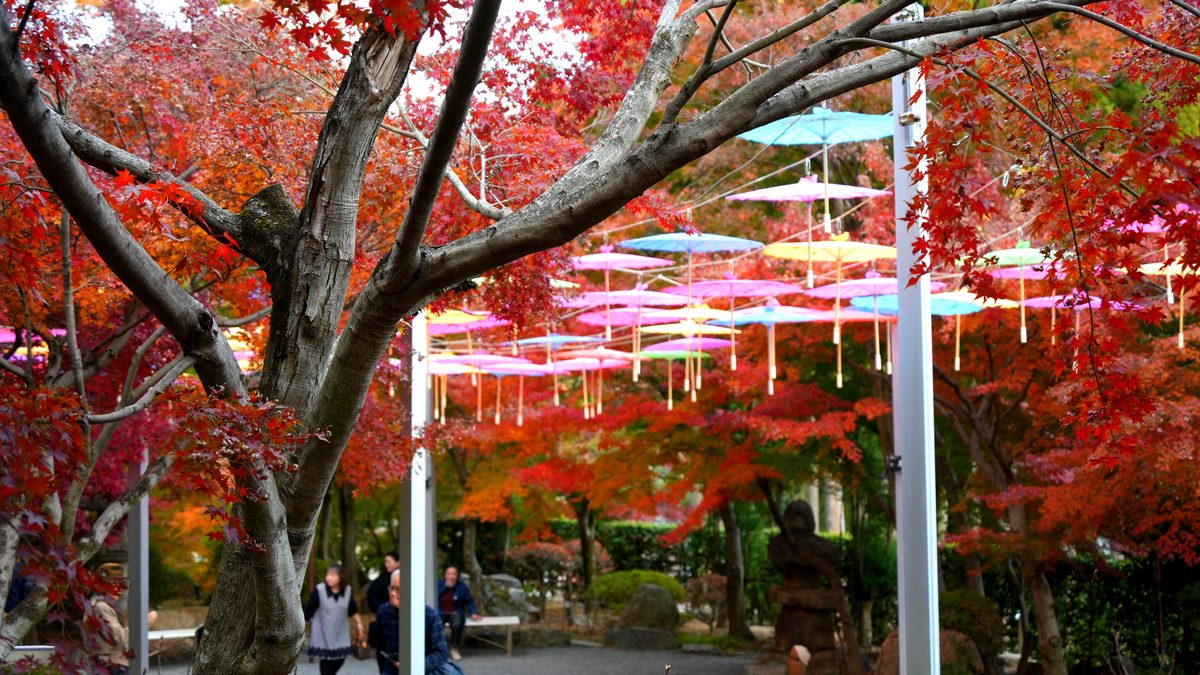 This one was taken with an iPhone 15 — umbrellas overhead.
 Now, on to the main attraction: the main hall with the mirrored floor.
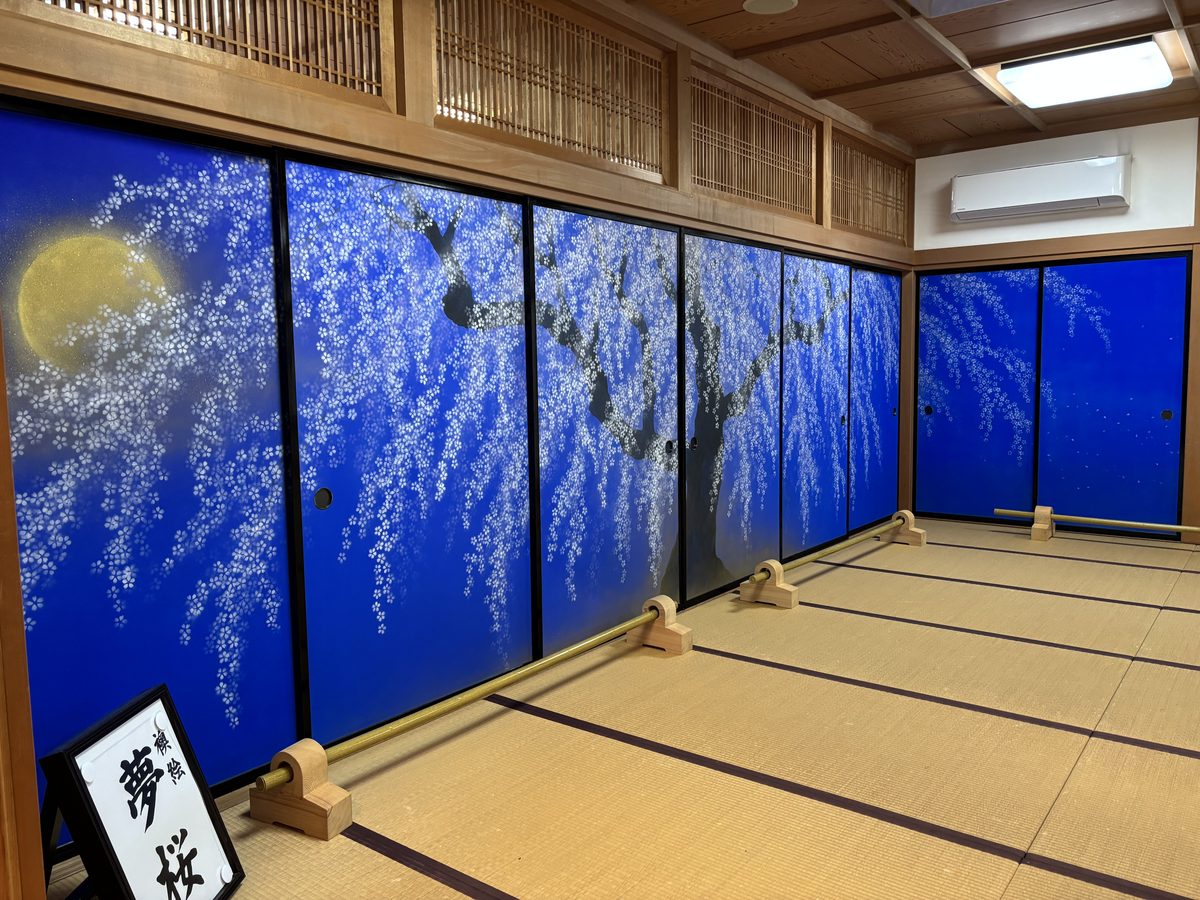
The room leading to the mirrored floor is also vibrant and colorful.
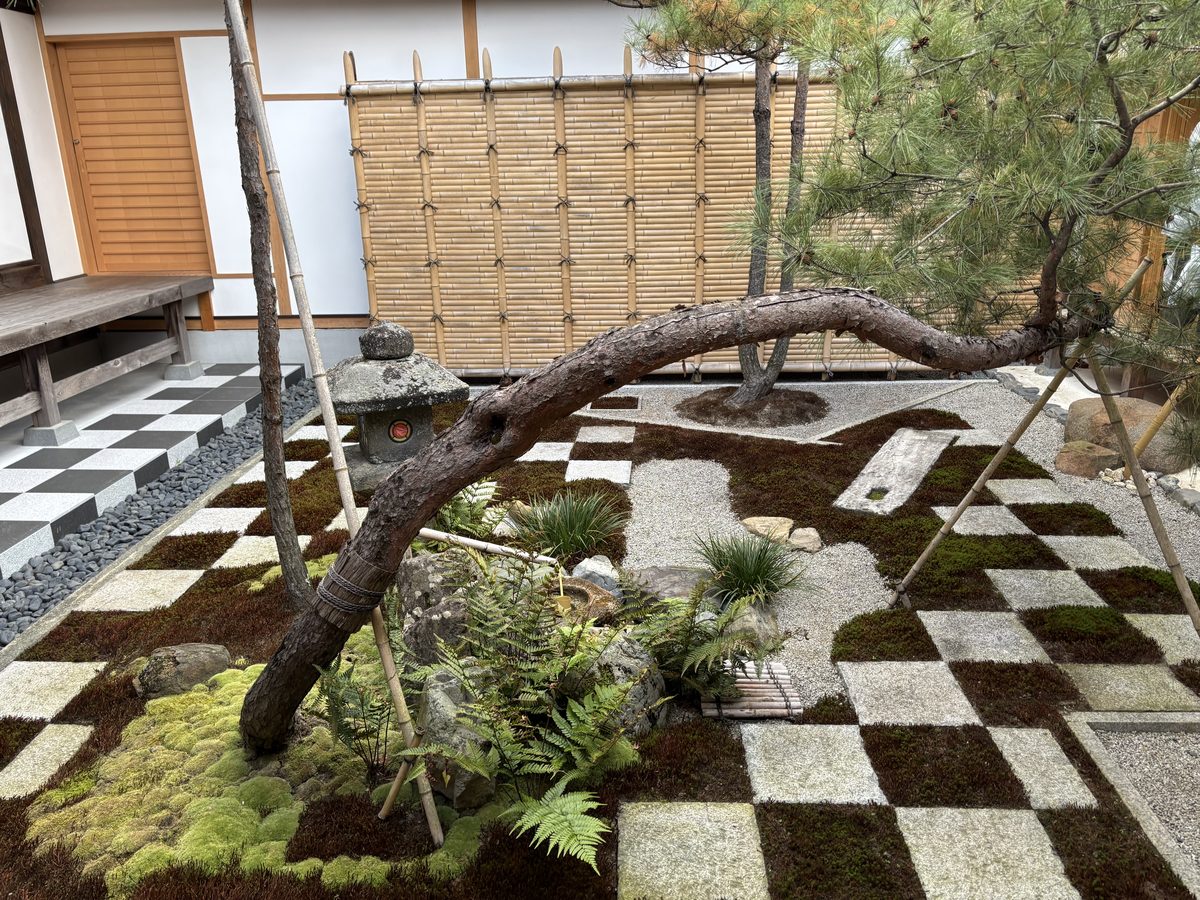
 The garden has a modern feel as well.
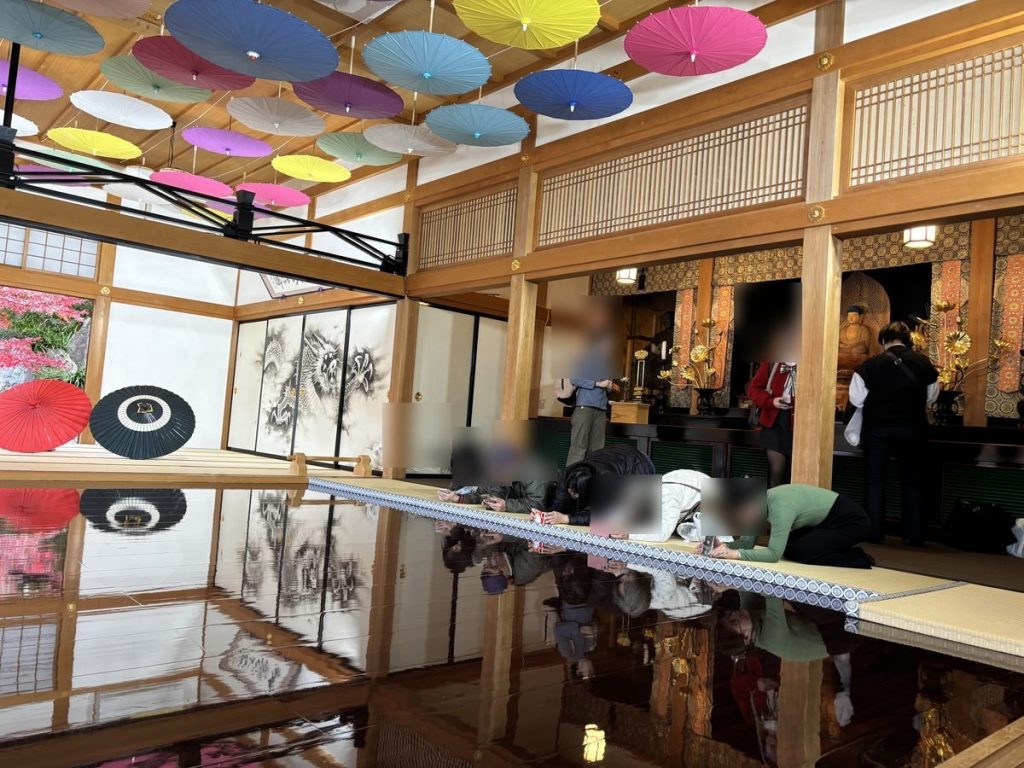
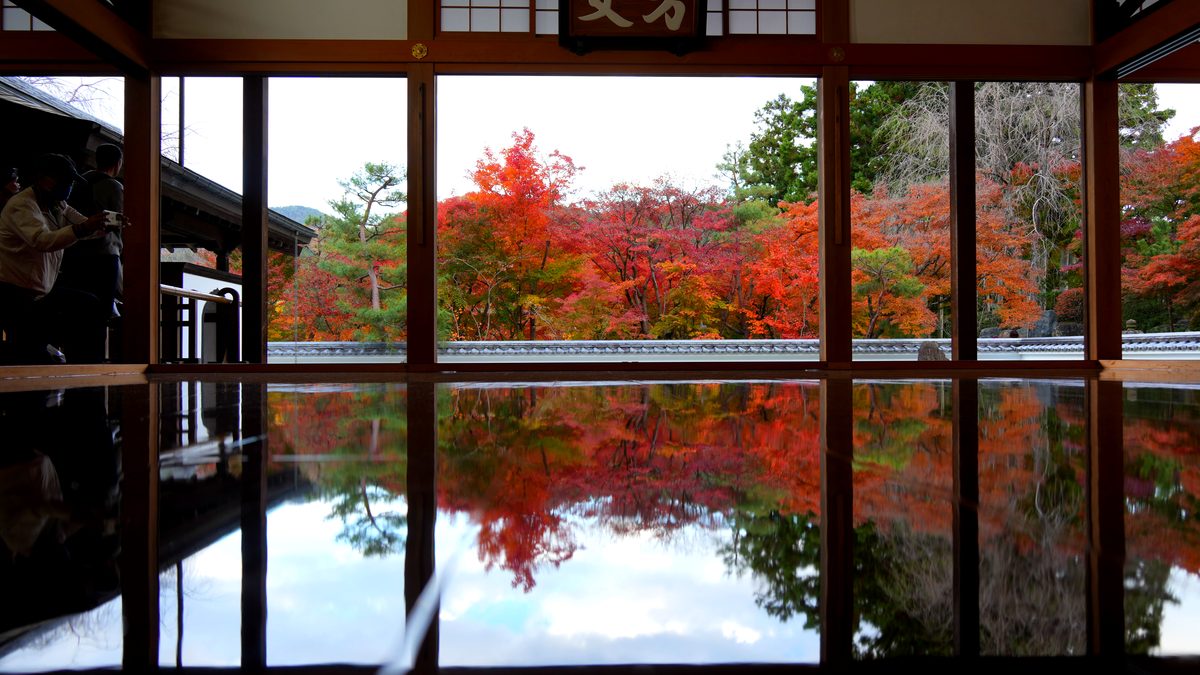
 The biggest highlight of Hotokuji is the polished floor in the abbot’s quarters (one room of the main hall).
When you look from the corridor that resembles an engawa (veranda), the autumn leaves outside the window are reflected sharply like a mirror on the glossy black floor.
 There are also umbrellas like this on the ceiling, making it very photogenic.
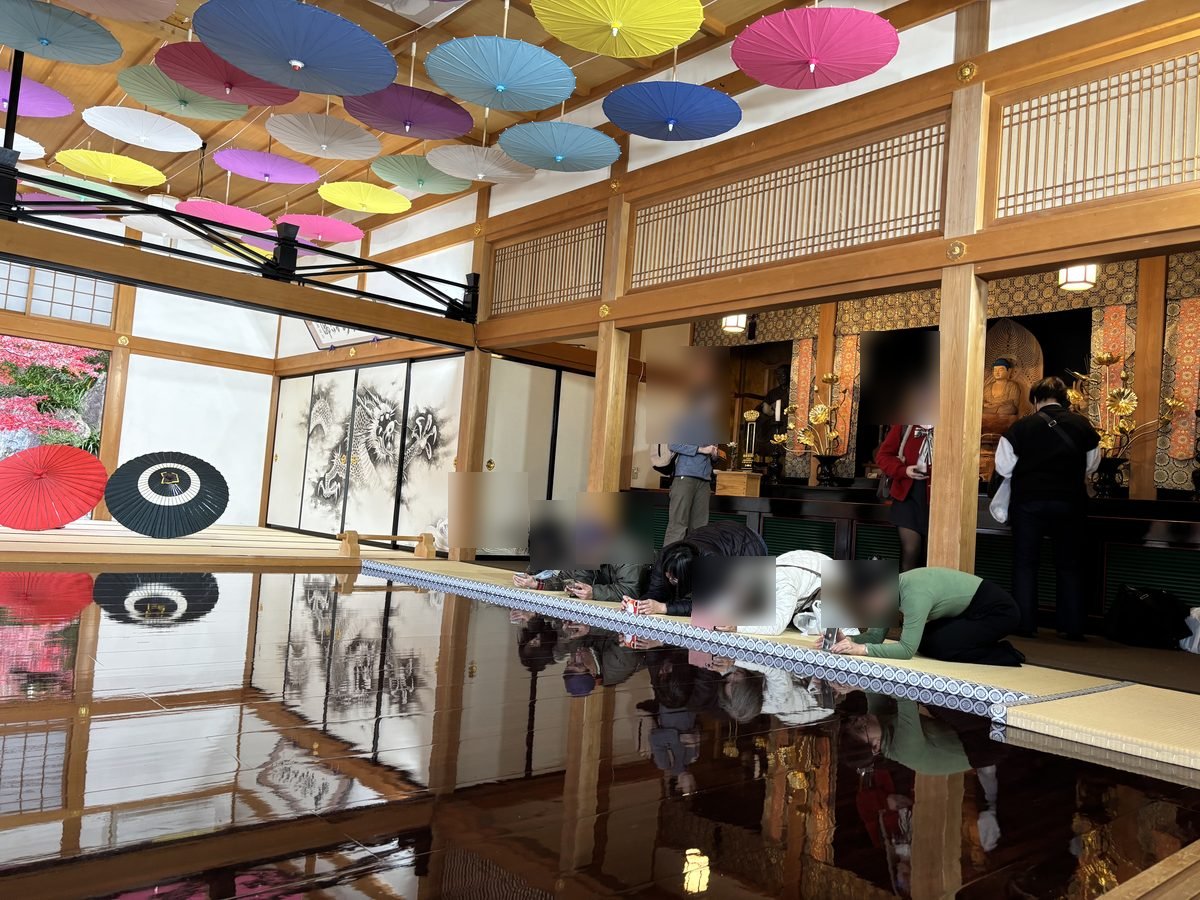
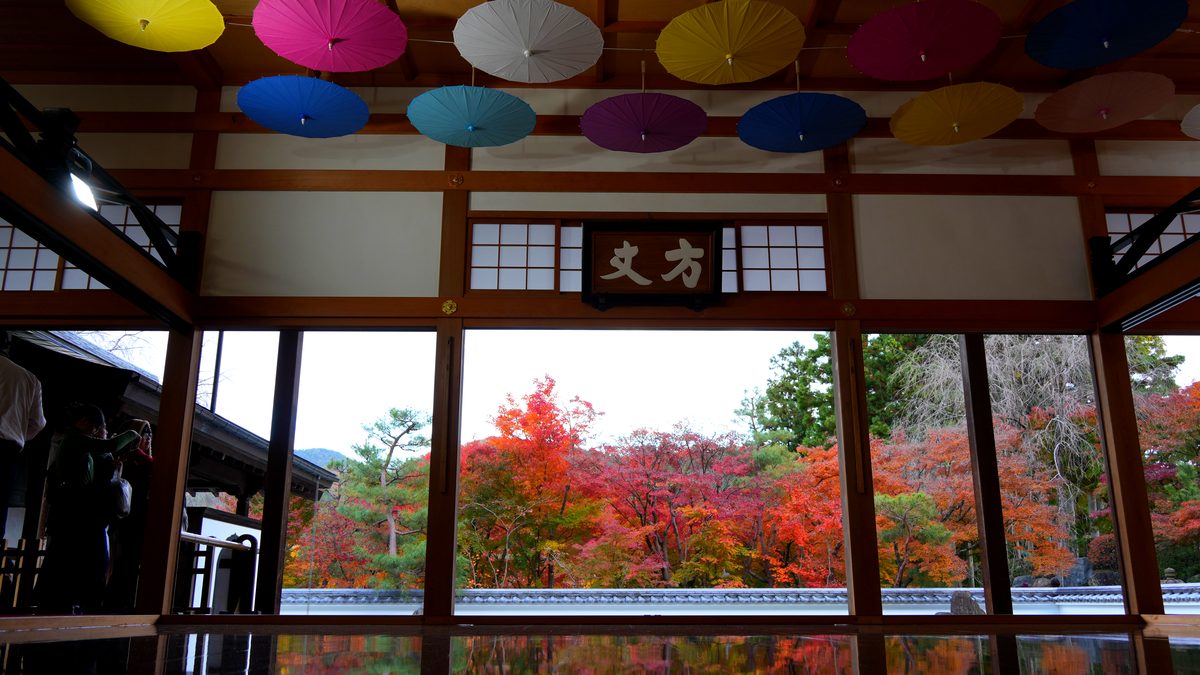 This scenery, also called “floor autumn leaves” (yuka momiji), is so captivating that everyone gets down on the floor in the same pose to take photos — it’s quite funny.
This side was impressive too.
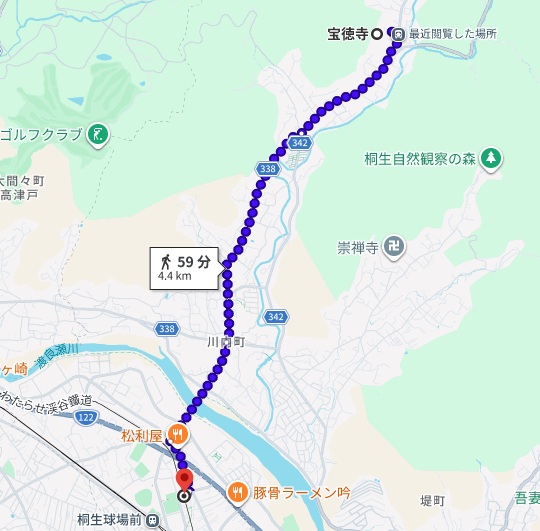
A Little Adventure on the Way Back: 4.4 km Walk from Hotokuji to Undōkōen Station
After thoroughly enjoying the temple grounds, I decided not to take the bus back and walked to the station instead.
There was no particular reason — I just thought that since there’s such a wonderful temple here, maybe I’d find some nice photo spots along the way if I walked.
With faint expectations and no plan at all, I just started walking.
In the end, I didn’t find any particularly great spots, so my camera stayed in my bag…
I arrived at Undōkōen Station.
Trivia Related to Hotokuji Temple
【Trivia】The True Nature of the Mirrored Floor (Floor Autumn Leaves)
This polished floor is the result of a craftsman’s skill — applying “hon-urushi” (real lacquer) dozens of times.
Because so much effort is put into it, the gloss only increases with the passage of time. It is truly a “floor polished by time.”
【Trivia】The History of Japanese Umbrellas
Japanese umbrellas were introduced to Japan during the Heian period. At first, they were not used to protect from rain, but as “sunshades for high-ranking people.” Only nobles and Shinto priests were allowed to have someone hold an umbrella for them — they were ultra-luxury items. It’s amazing that they have now become art installations in a temple grounds. The umbrella has certainly come a long way.【Trivia】Why Autumn Leaves Turn Red
When the temperature drops below 10°C in autumn, the chlorophyll (green pigment) in the leaves breaks down, and at the same time, a new red pigment called anthocyanin is produced. This chemical change creates the “red autumn leaves.” In other words, the leaves are not simply withering — the tree is temporarily “burning” with color.
Summary: Hotokuji Temple in Kiryu City
Hotokuji Temple is a hidden gem where “autumn leaves,” “floor autumn leaves,” and “Japanese umbrellas” come together in perfect harmony. It’s a great spot you can easily enjoy as a day trip from Tokyo.
It does get somewhat crowded, but the grounds are spacious, so you can take your time without rushing.In just 1 hour and 40 minutes from Tokyo, you can visit such an extraordinary space.
This is exactly why day trips are so addictive.Shooting date: November 21, 2025
Location: Hotokuji Temple (Kiryu City, Gunma Prefecture)
Camera: Sony α / iPhone
Weather: Sunny
High temperature: 19°C
Low temperature: 2°C
https://www.data.jma.go.jp/obd/stats/etrn/index.php?prec_no=42&block_no=47624
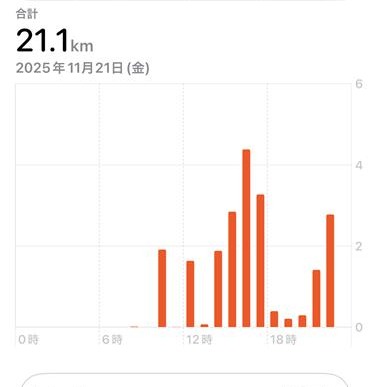
Distance walked this day: 21.1 km
Steps: 31,887