I had one leftover Seishun 18 Kippu ticket.It would be a waste not to use it.
So, I decided where to go just 30 minutes before departure.
“Utsunomiya… Oya History Museum.”“I’ve been curious about it for a while, and this seems like the perfect chance.”I think this is a classic ADHD thing, but these impulsive, last-minute trips often end up being way more fun than carefully planned ones.By the way, the correct reading of 大谷資料館 is “Ōya Shiryōkan” — not “Ōtani.” (I finally learned that.)
First, to Utsunomiya with the 18 Kippu
It took about two hours from Tokyo on a local train on the Utsunomiya Line (Tohoku Main Line). While watching the scenery gradually turn into countryside, I researched the Oya History Museum on my phone.
“An underground space 30 meters deep with an area of about 20,000 square meters…”20,000 m². I couldn’t picture it, so I converted it.
That’s larger than the Tokyo Dome field (about 13,000 m²).
Basically, there’s a Tokyo Dome-sized space underground. My excitement level instantly shot up.From Utsunomiya Station to Oya by bus
I took the Kanto Bus from the west exit of Utsunomiya Station. It took about 25 minutes.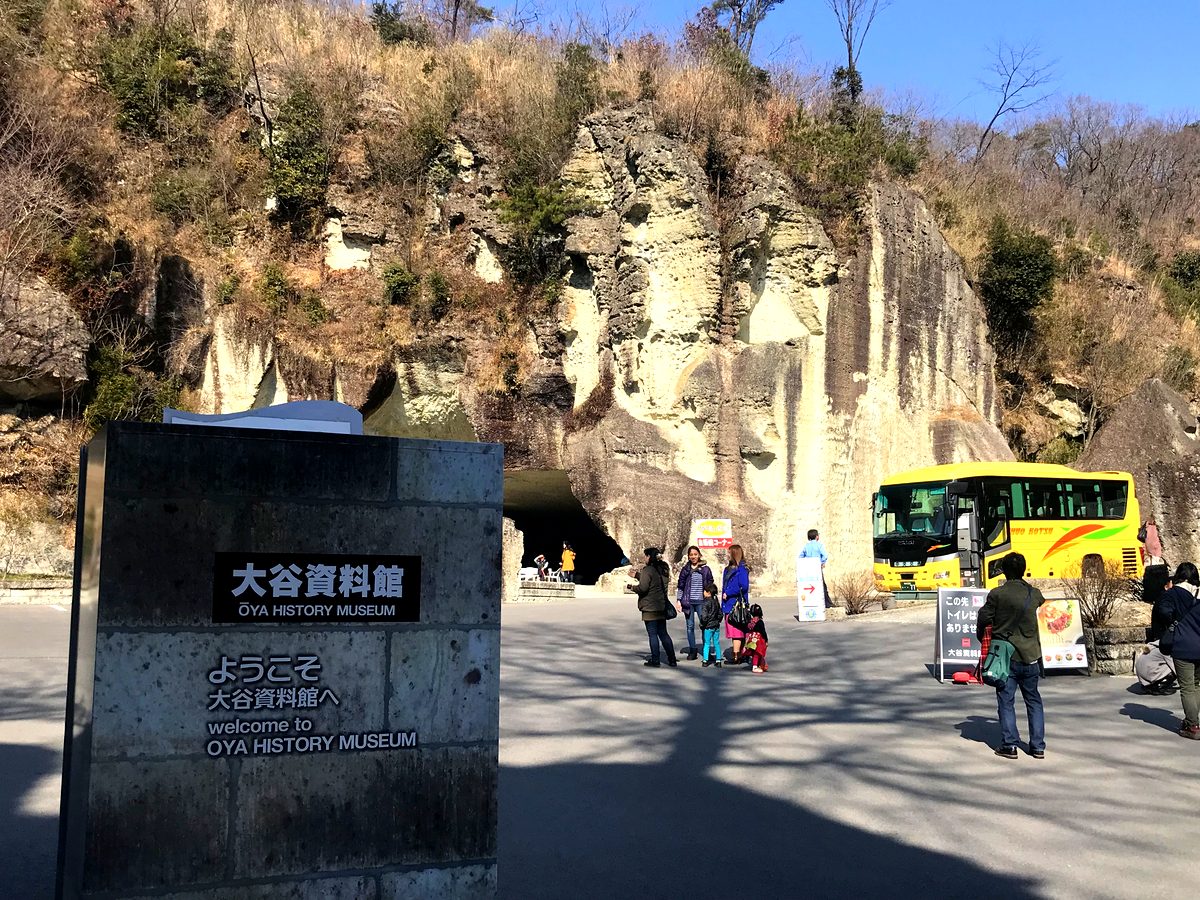
What is Oya Stone? Some Trivia
The Oya area is located in the northwest of Utsunomiya City.
This region has long been known as a major source of Oya Stone (Ōya-ishi), a type of tuff, with mining history dating back over 1,000 years.Oya Stone TriviaOya Stone is soft and easy to carve, yet it has excellent fire resistance.
From the Meiji to Showa periods, it was shipped all over Japan and widely used for warehouse walls and stone fences.
It was even used in the old Imperial Hotel (the Frank Lloyd Wright building).
There’s a famous story that Frank Lloyd Wright said, “I like this stone,” and chose it for the project.When I got off the bus, I was greeted by a unique landscape surrounded by rock walls.
Among the rocks were strangely everyday signs like “Friendship Plaza – Vending Machine Corner,” which made me chuckle.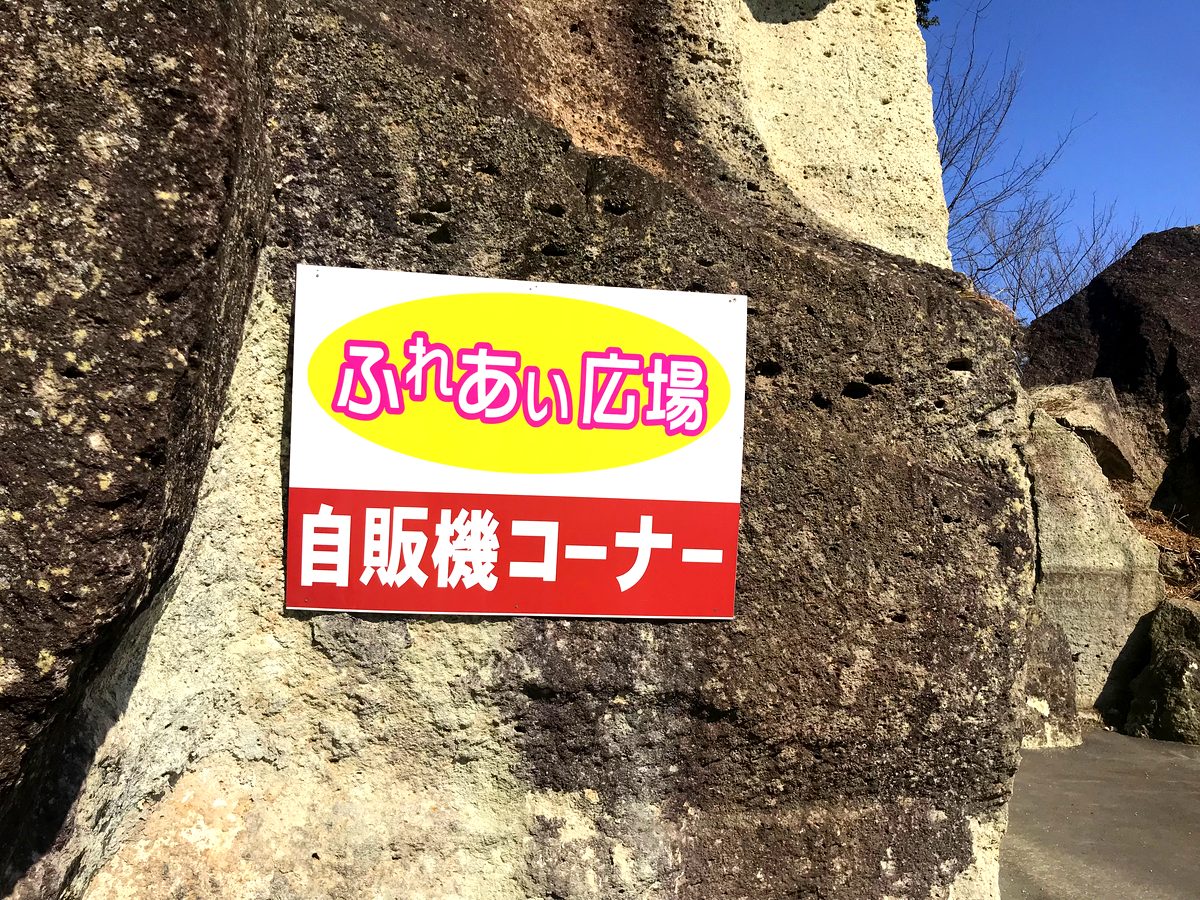
The entrance to the quarry tunnel looked surprisingly modest.
Maybe that contrast is part of its charm.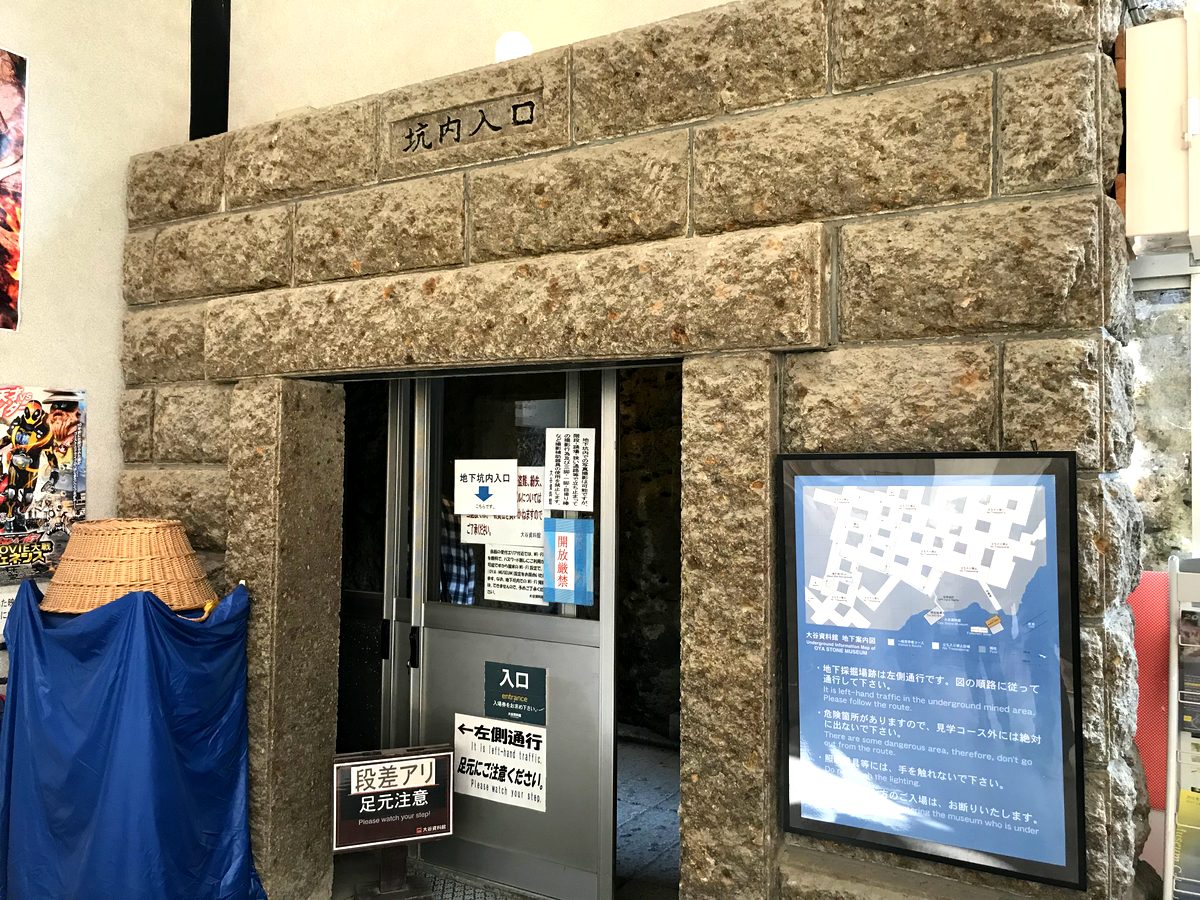
Heading into Oya History Museum
Descending UndergroundAfter paying the admission fee, I went down the stairs leading underground.…It was cold.Outside it was almost 20°C in March, but the moment I entered the underground, the temperature dropped to single digits.
The Oya History Museum maintains a constant temperature of about 8°C year-round.
If I had come in summer, I might have died…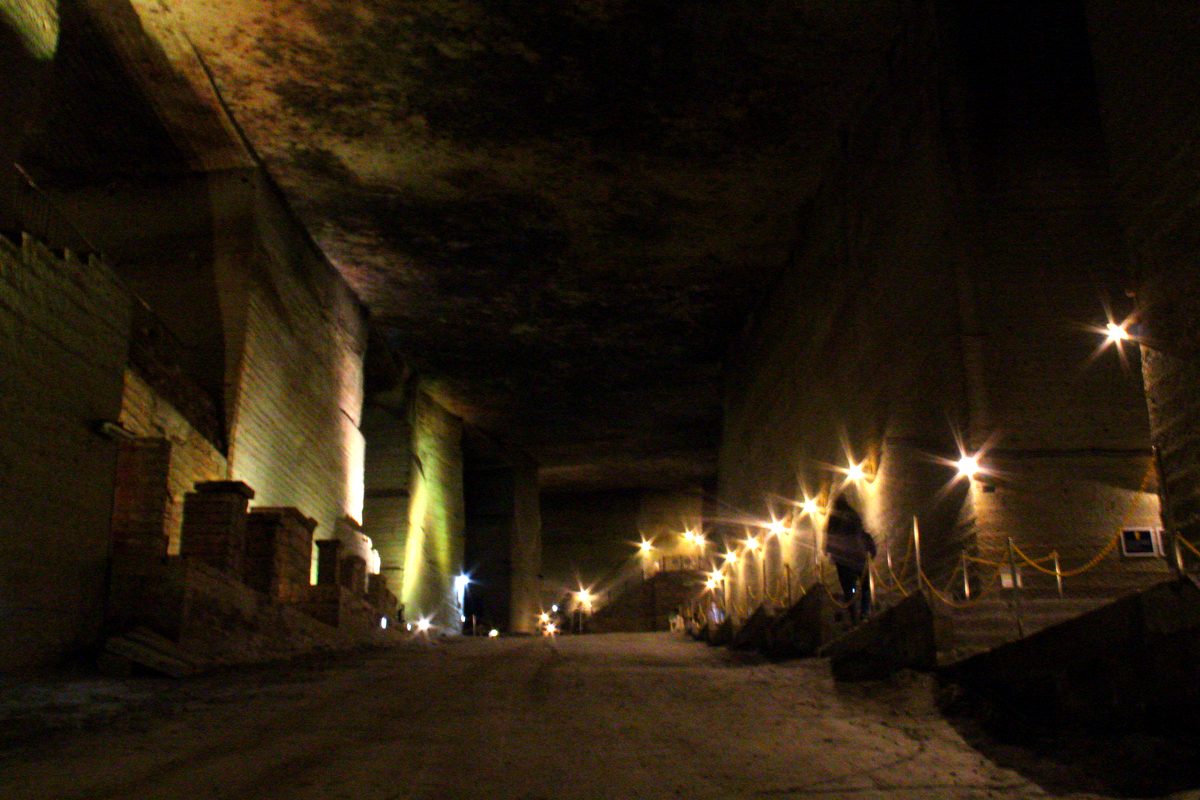
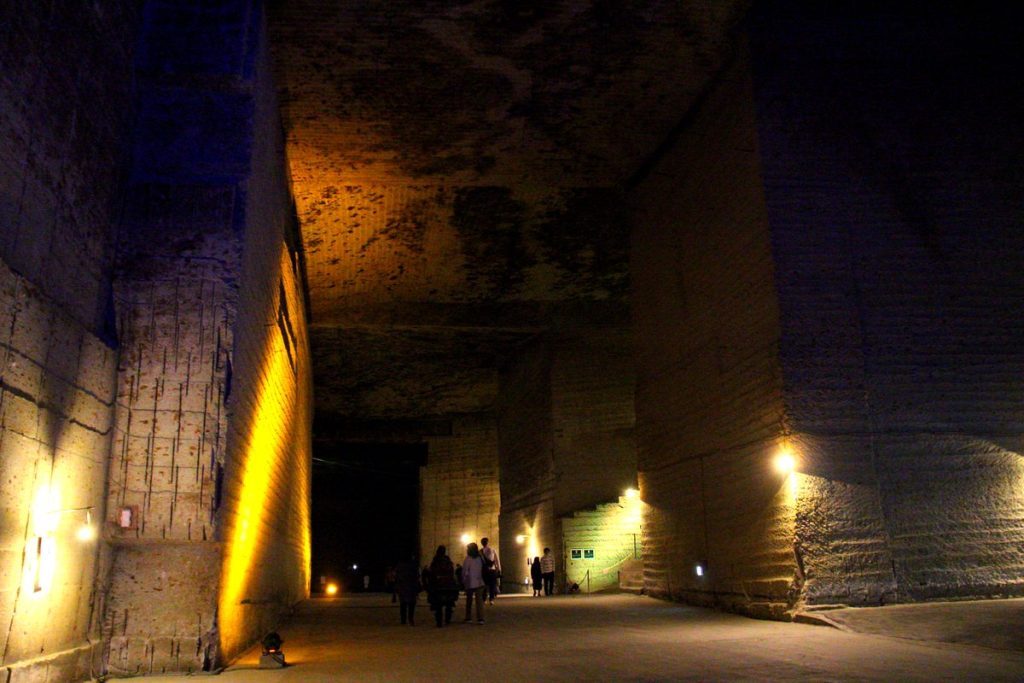
As soon as I stepped into the underground space, an overwhelming sight spread before me.It’s huge.The ceiling must be 20 to 30 meters high.
The rock walls are covered with countless chisel marks.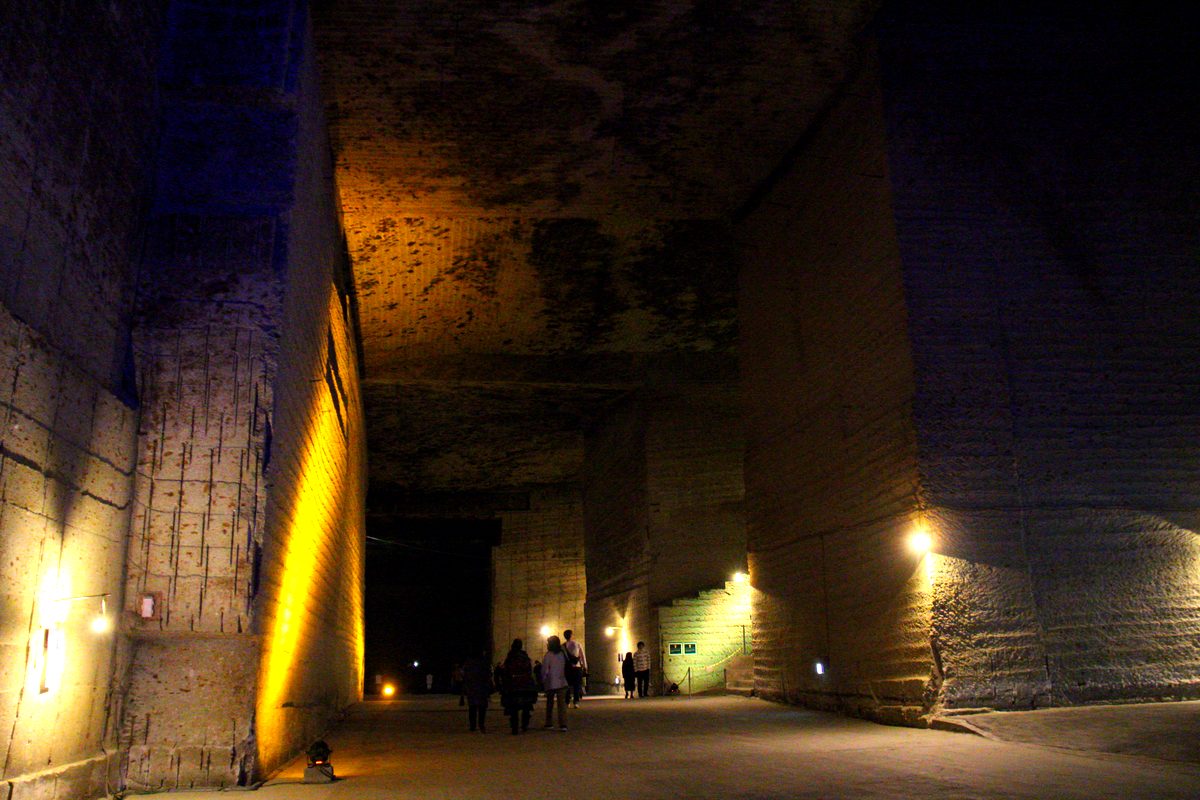
The delicate unevenness of the walls beautifully highlighted by stylish lighting.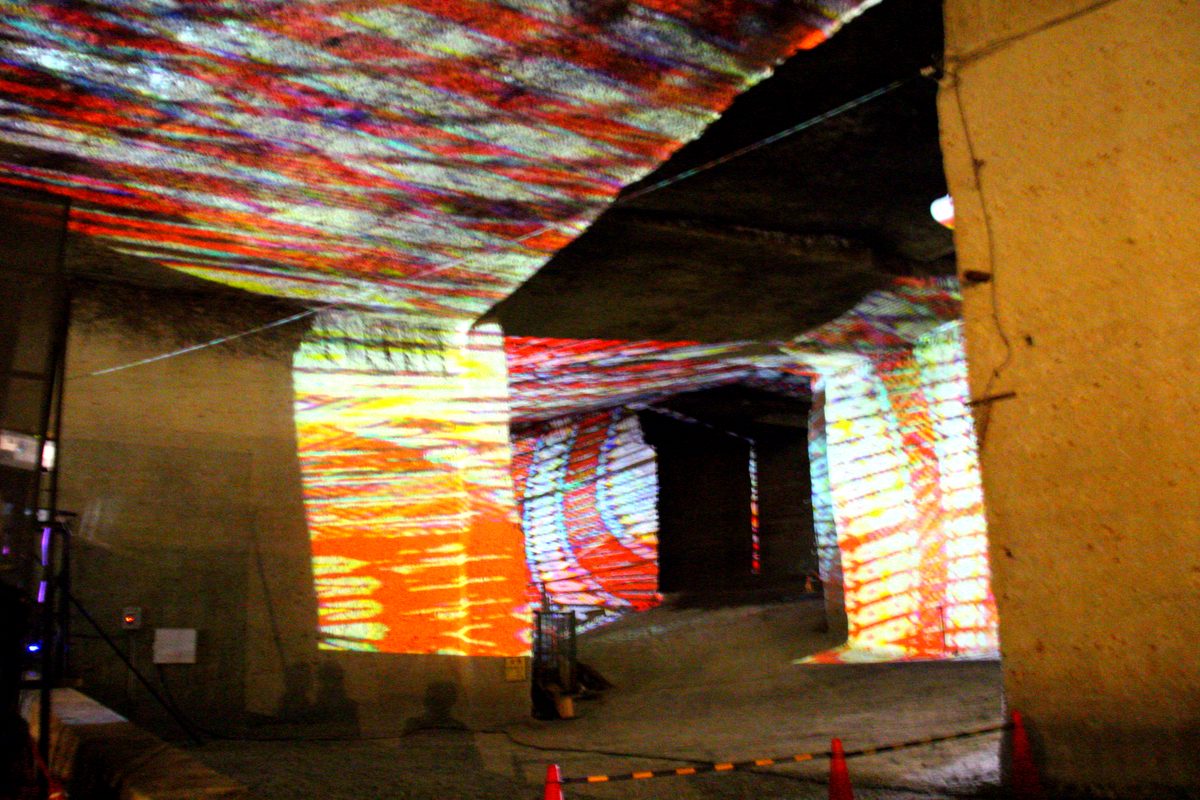
And the fact that all of this was dug by human hands is truly astonishing.
From the Taisho to Showa eras, stonemasons worked with hand tools and machines to create this vast cavern.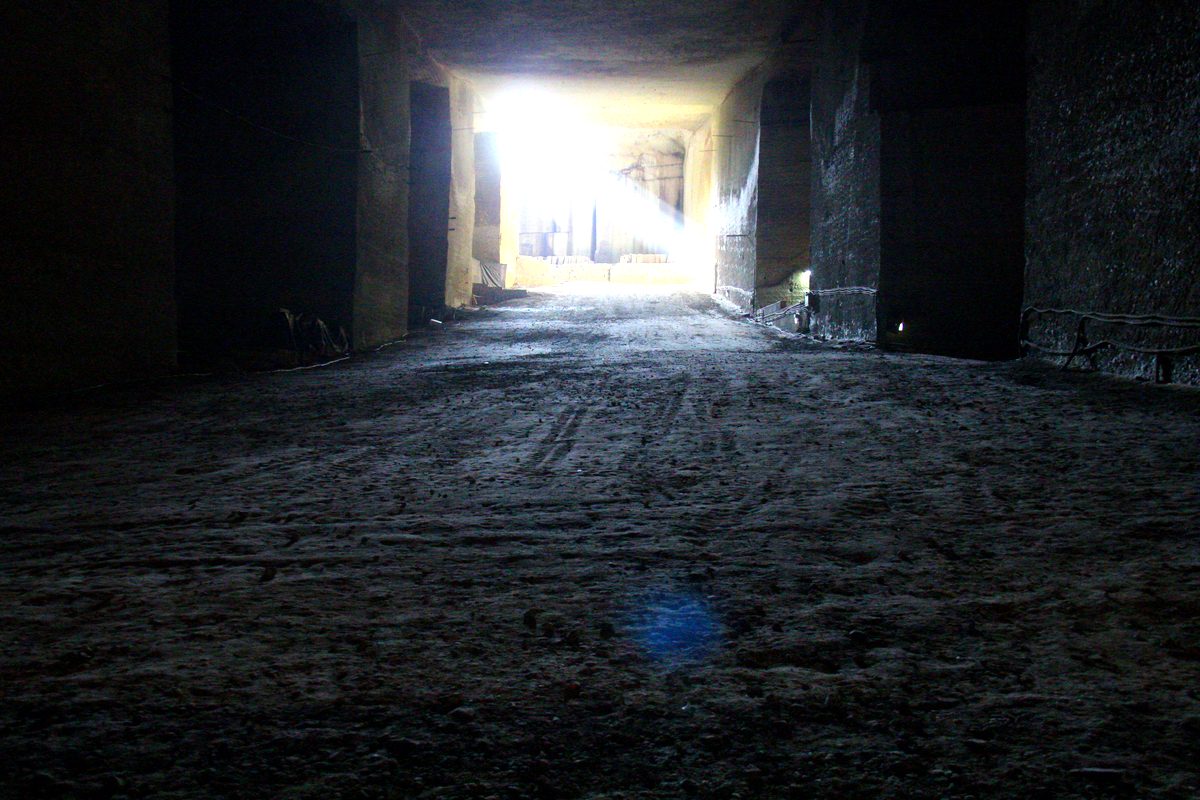
The Mining Traces Have Become an Art Space
Since opening to the public in 1979, the Oya History Museum has not only preserved the history of mining but has also been used for exhibitions, concerts, and film shoots.This is where B’z guitarist Takahiro Matsumoto performed on guitar.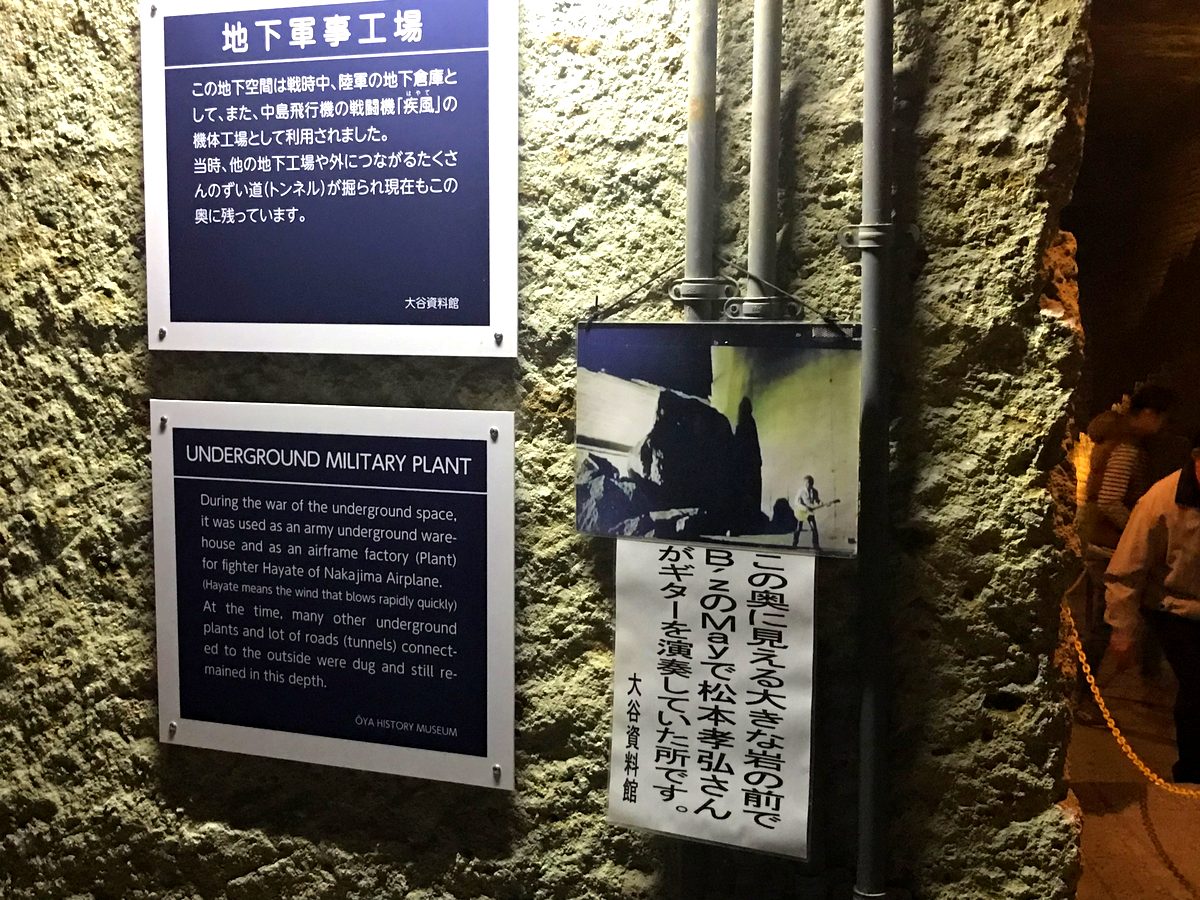
This is also the location where Sandaime J Soul Brothers filmed the music video for “SAKURA.”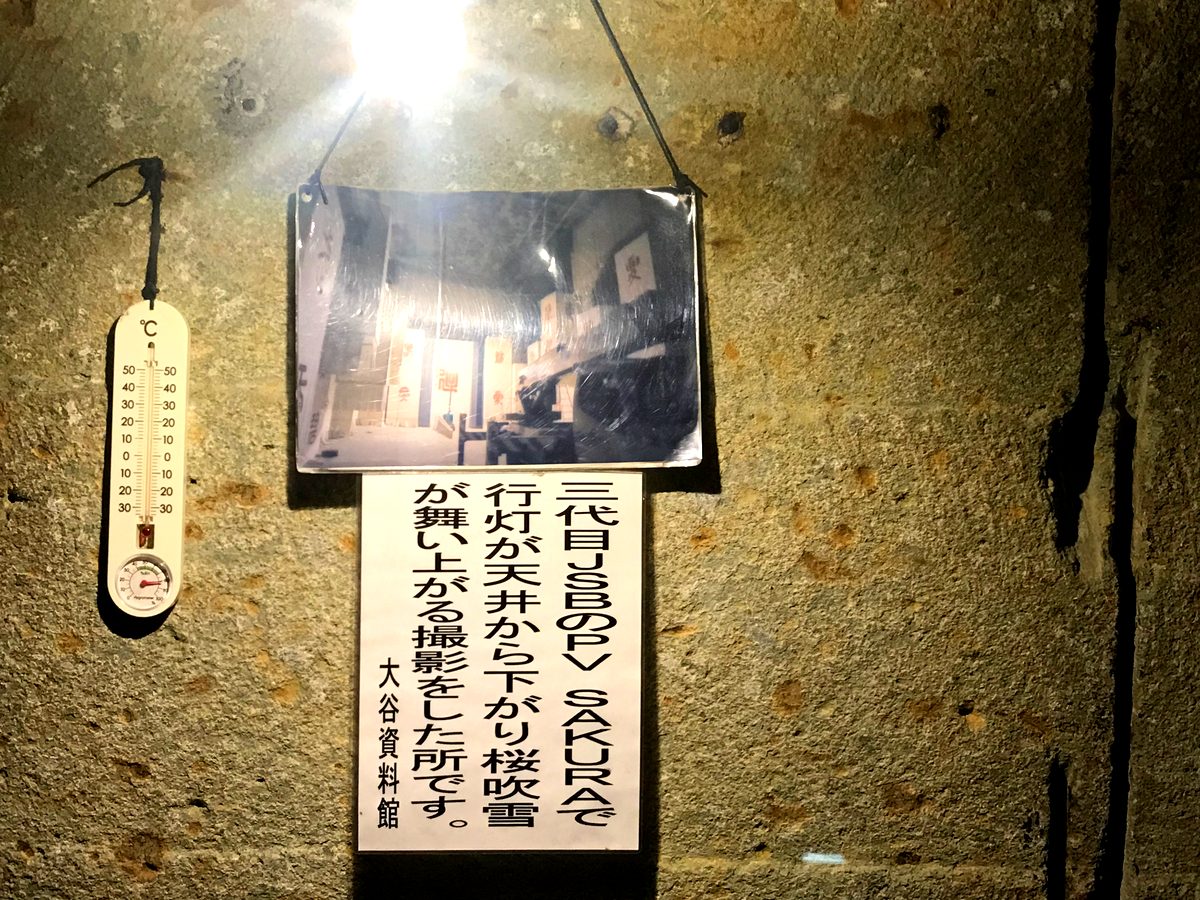
Artworks are displayed on the walls, and they have a completely different impact in this unique atmosphere.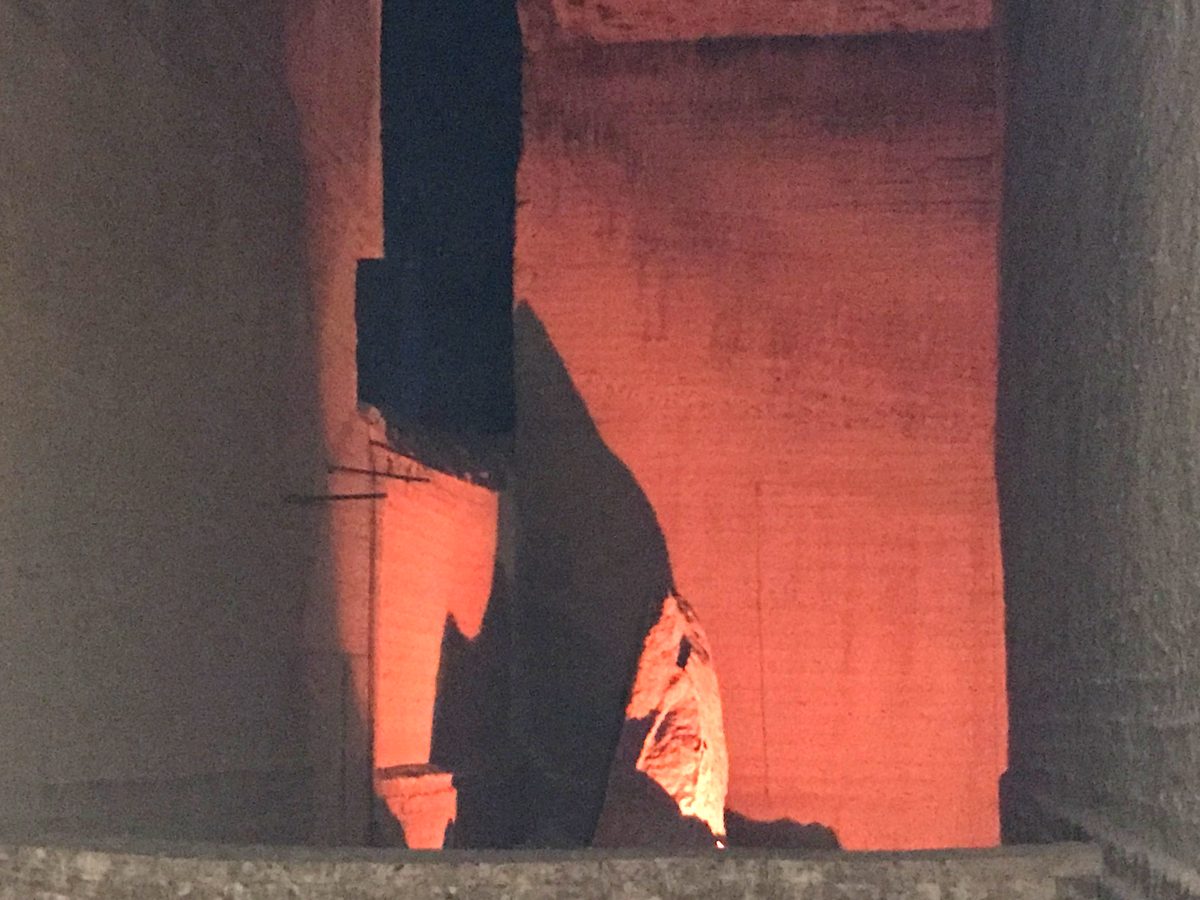
The site is also popular for movie and drama filming locations, appearing in works such as Kamen Rider and Rurouni Kenshin.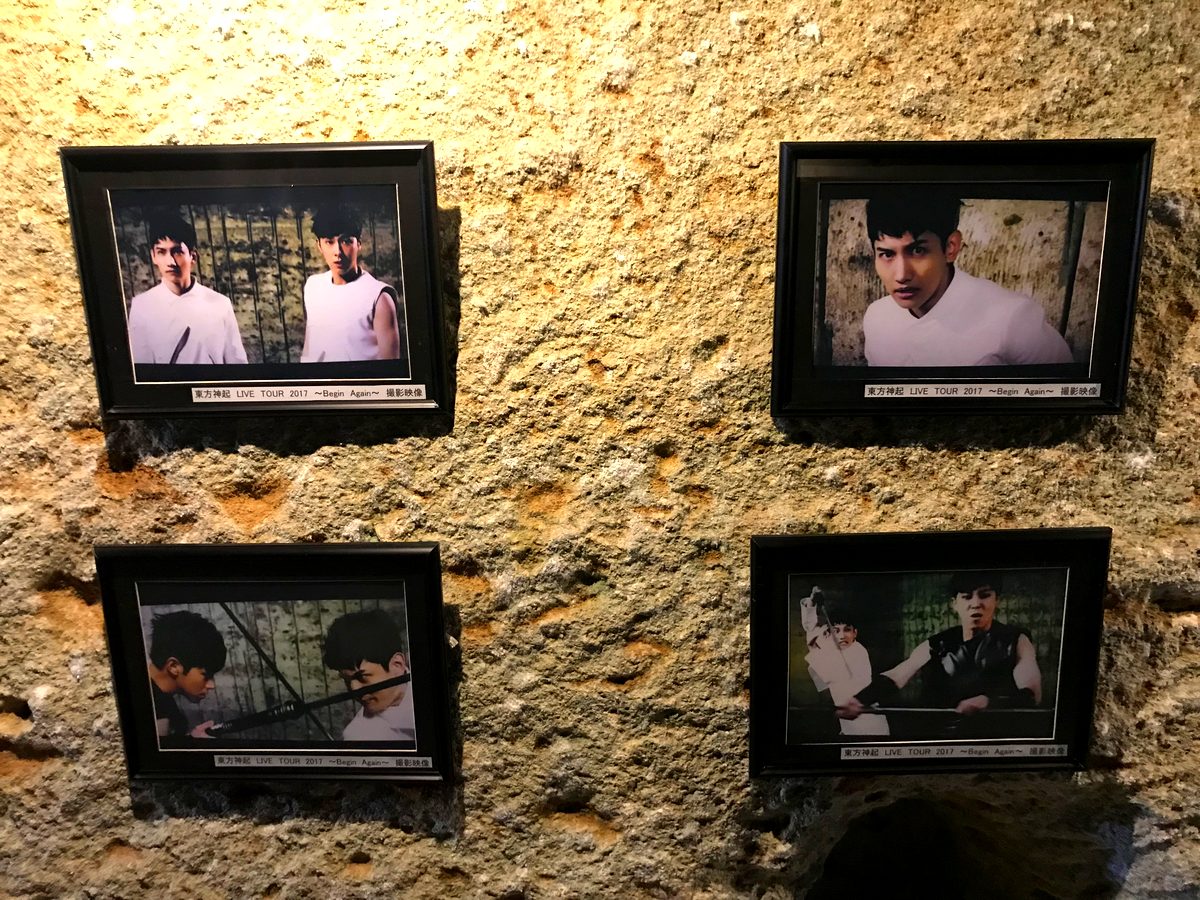
I was glad I brought my camera. In the dark underground, a smartphone wouldn’t have been enough!
I walked around raising the ISO and took lots of photos.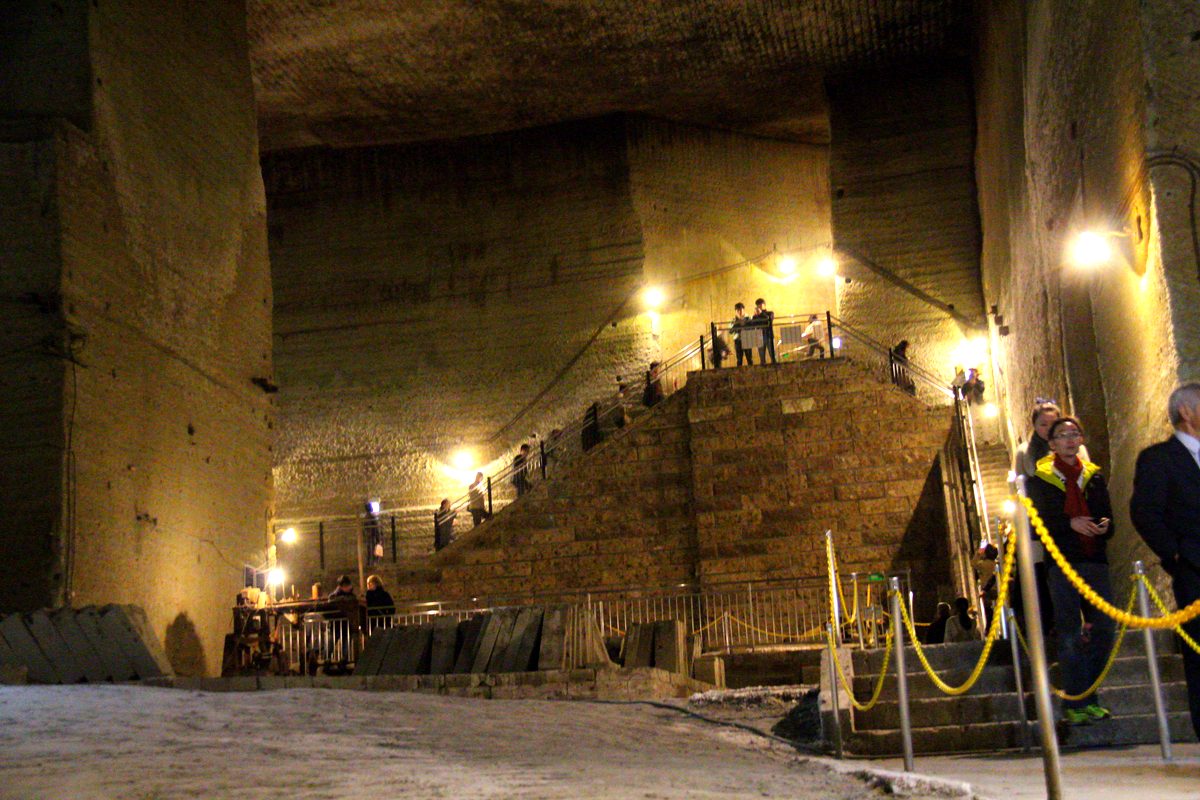
Back in Utsunomiya for Gyoza
After returning to Utsunomiya, I headed into the station building.When you think of Utsunomiya, you think of gyoza.
I probably don’t need to explain this, but Utsunomiya is one of Japan’s top gyoza cities, with over 100 specialty shops.
It competes with Hamamatsu and Miyazaki for the highest annual gyoza spending per household.This time I visited Ganso Umai-ya (Umai-ya) JR Utsunomiya Station Branch.
(Tabelog rating 3.49)I ordered the set with grilled gyoza, boiled gyoza, rice, and miso soup.
The gyoza skins were chewy, and the meat filling was juicy.
The boiled gyoza had rich flavor in the soup too — both were excellent.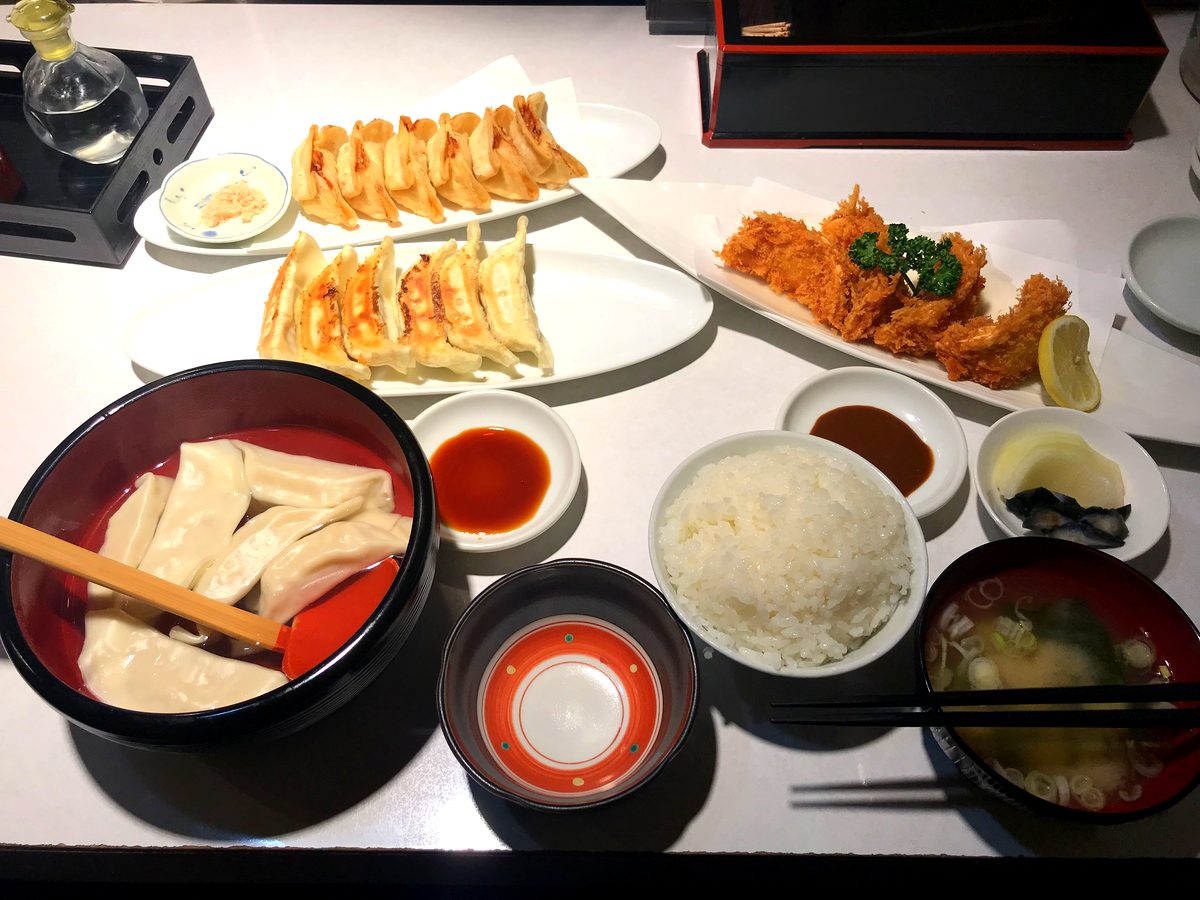
Summary of Oya History Museum
Oya History Museum is a tourist spot with surprisingly high potential in terms of wow factor.
Maybe it felt even better because my expectations were low? However, it’s quite cold underground, so I recommend bringing a jacket even in summer.Also, bus service is infrequent, so be sure to check the timetable in advance.Shooting date: March 4, 2018
Location: Oya History Museum, Utsunomiya City, Tochigi Prefecture
Camera: Canon EOS Kiss X7i / EF-S18-200mm F3.5-5.6 IS, iPhone 7 Plus
Weather: Clear (the warmest day of the year so far, like April–June weather)
High: 20.0°C / Low: 1.6°C
Distance walked: 10.1 km
Steps: 14,738