May 3, 2024 — Golden Week was in full swing across Japan.
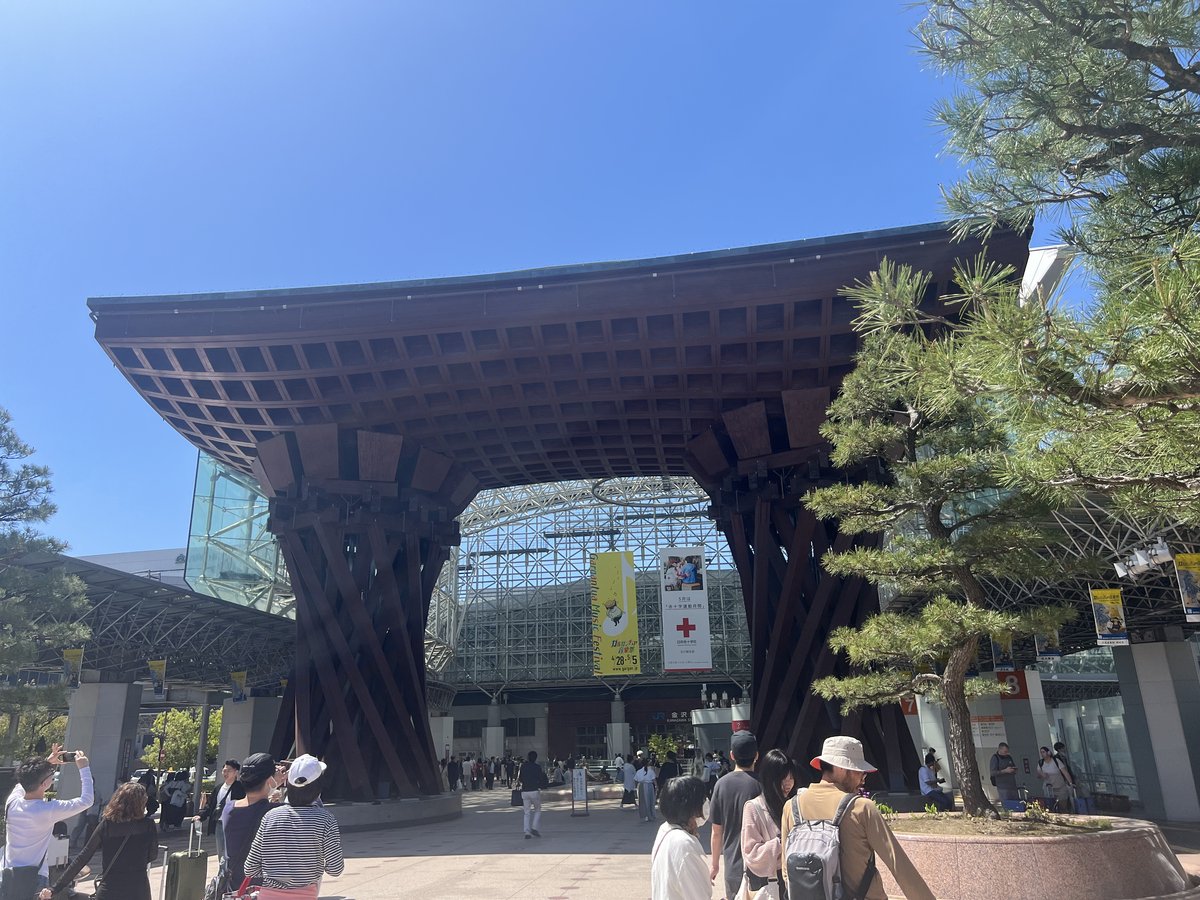
As a representative of the “people who knowingly visit crowded places,” I headed to Kanazawa, Ishikawa Prefecture.Kanazawa Station is famous for its Tsuzumi-mon Gate.
First, to Kanazawa Castle
A 30-minute walk is totally doable.
I walked straight from Kanazawa Station to Kanazawa Castle.
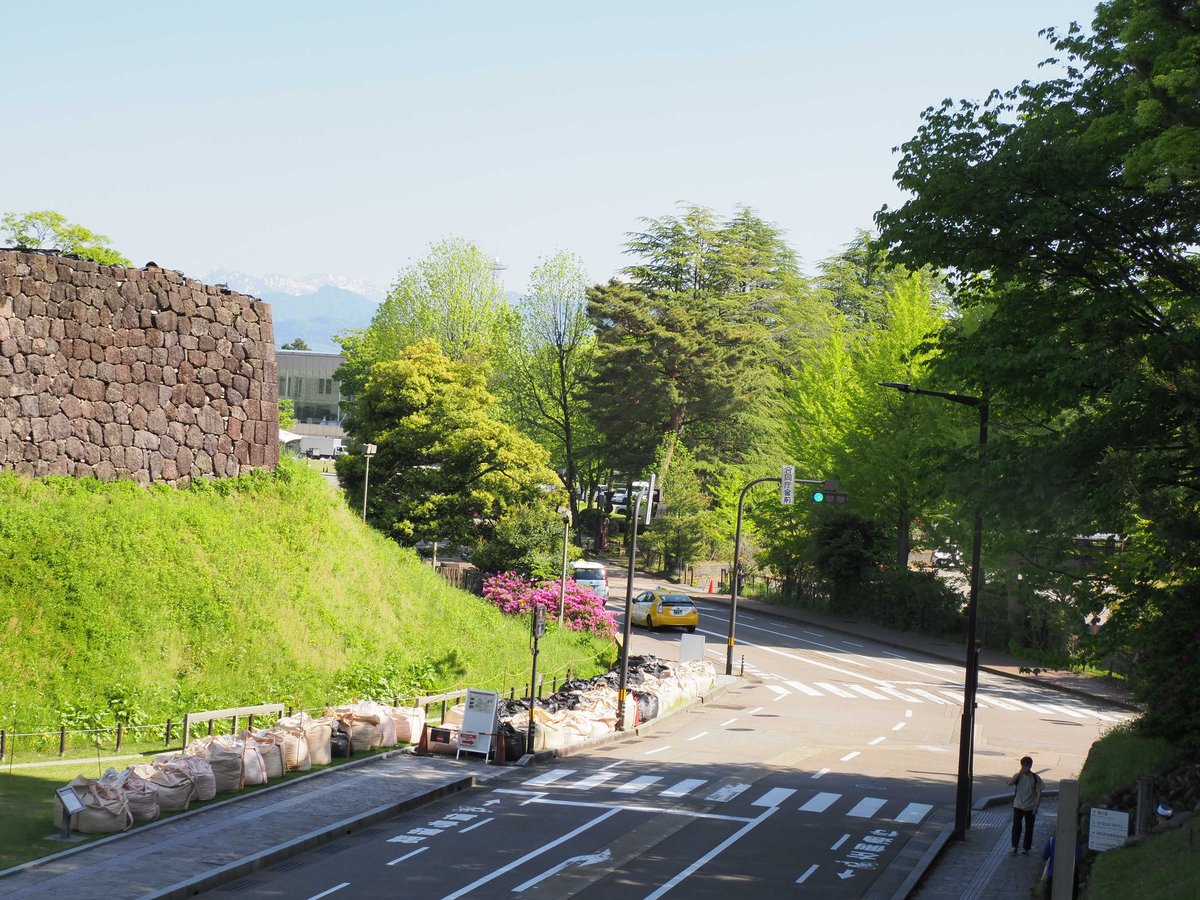
I entered through the Nezumitamon Gate (Nezumita-mon).
Located on the west side of Kanazawa Castle, this gate features the rare “black namako-kabe” (sea cucumber wall) plaster, restored in 2020.
I think this is the shortest route if you’re walking into the castle from the station.
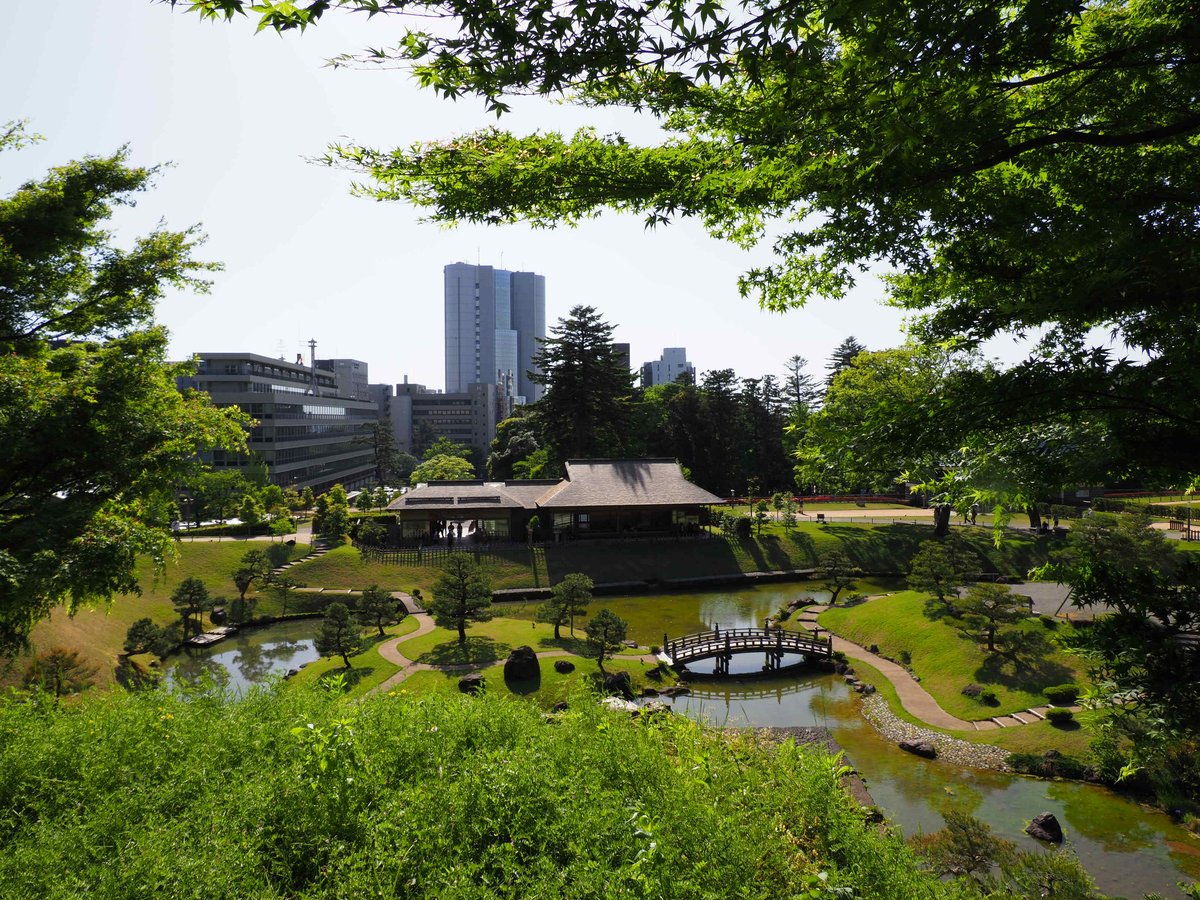
Right after entering through Nezumitamon Gate, you’re greeted by a magnificent garden — the Gyokuseninmaru Garden.
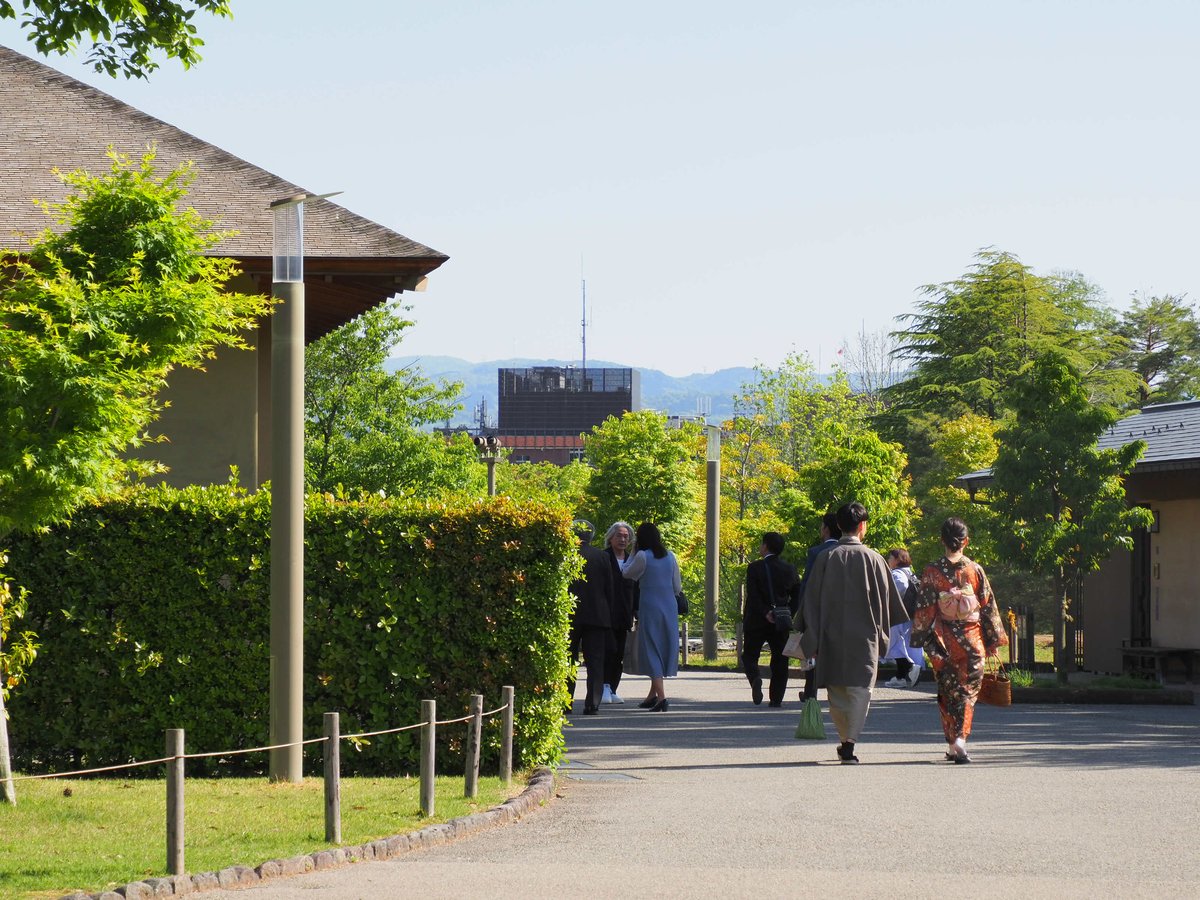 I ended up spending 30 minutes just in the Gyokuseninmaru Garden without even noticing.
 Next was the Hashizume-mon Gate.
The gate at the end of the bridge in the lower left of the photo is Hashizume-mon, the main gate leading into the Ninomaru. It is said to be the most prestigious gate in the castle.
Hashizume-mon Tsuzukiyagura: A three-story turret built on the stone wall after passing through the gate.
Gojikken Nagaya: The very long two-story multi-turret warehouse extending to the right.
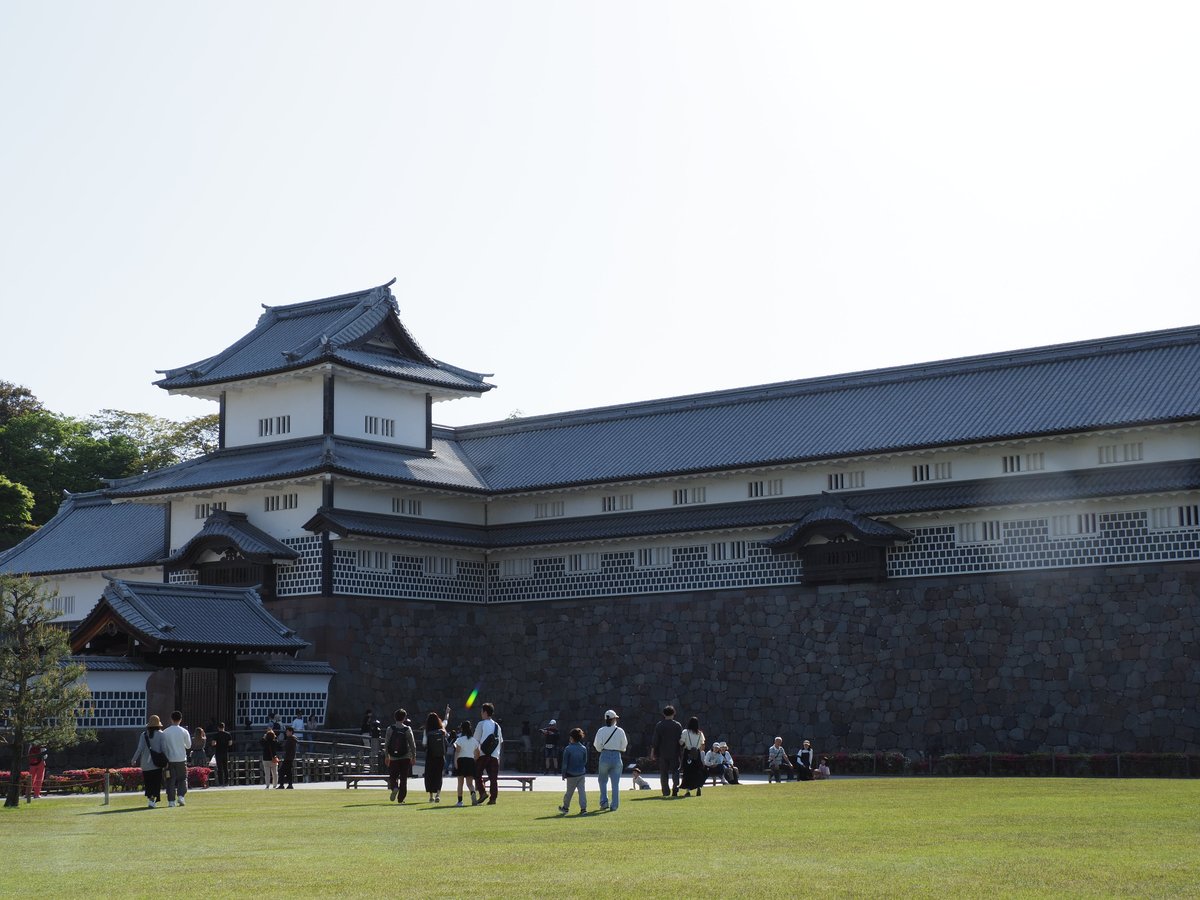 By the way, there is no main keep (tenshu) at Kanazawa Castle.
It was destroyed by lightning in 1602 and was never rebuilt out of consideration for the Edo Shogunate.
Kenrokuen Garden, right next to Kanazawa Castle
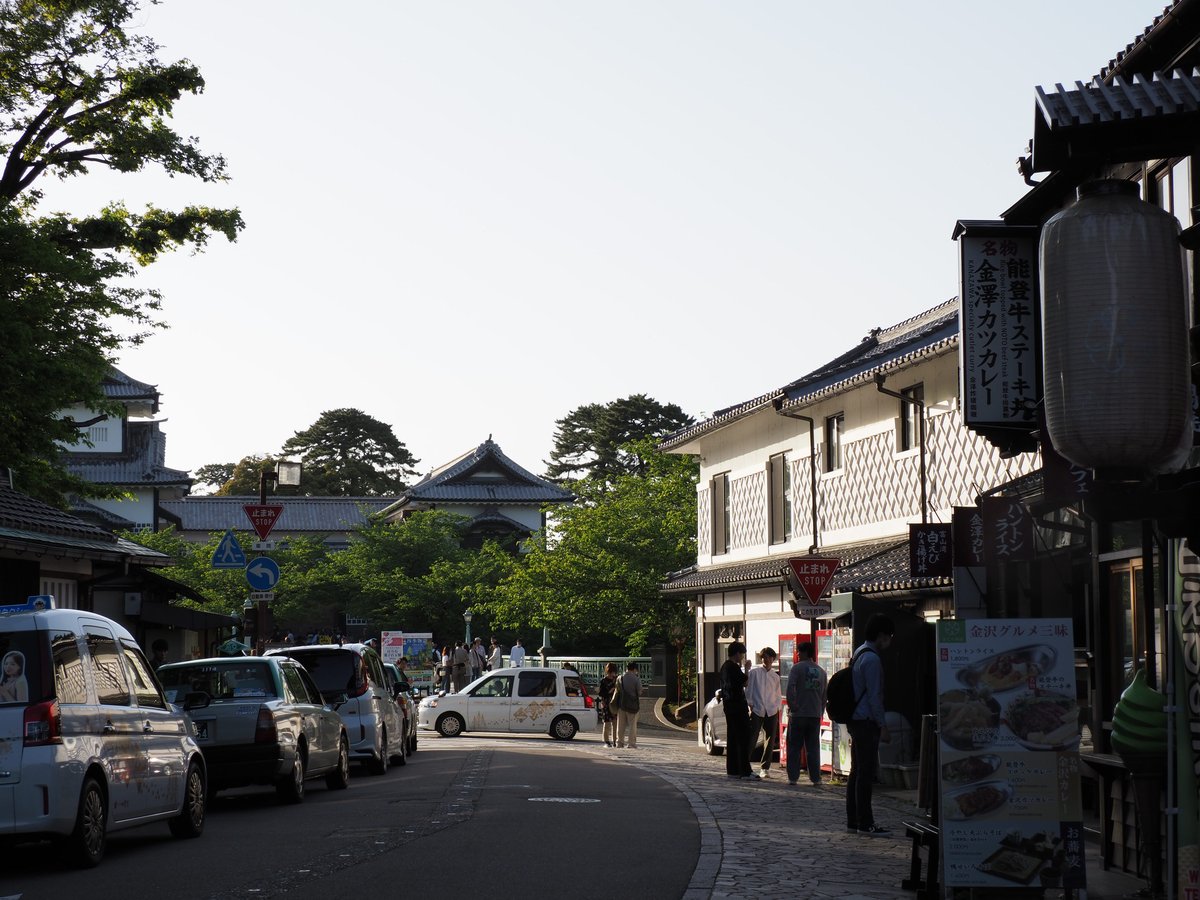
I crossed the Ishikawa Bridge and headed to Kenrokuen Garden.
You can see Ishikawa Yagura in the distance.
Photo taken from the Kenrokuen side.
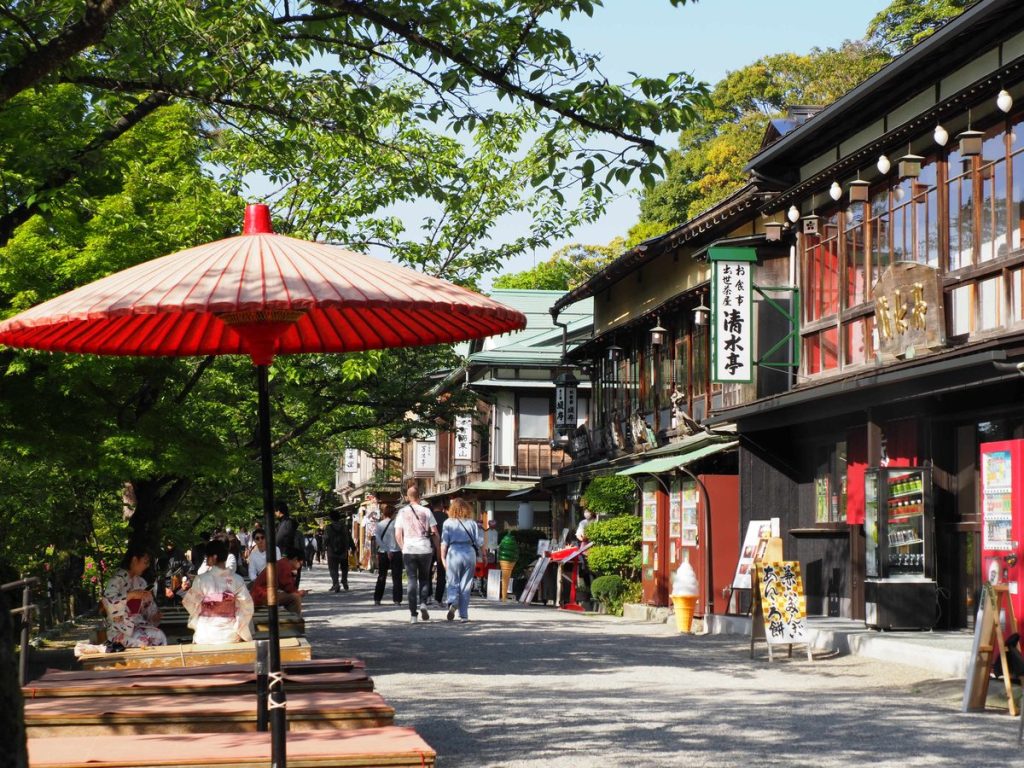
Near the entrance, there is a row of teahouses called Chamise-dori.
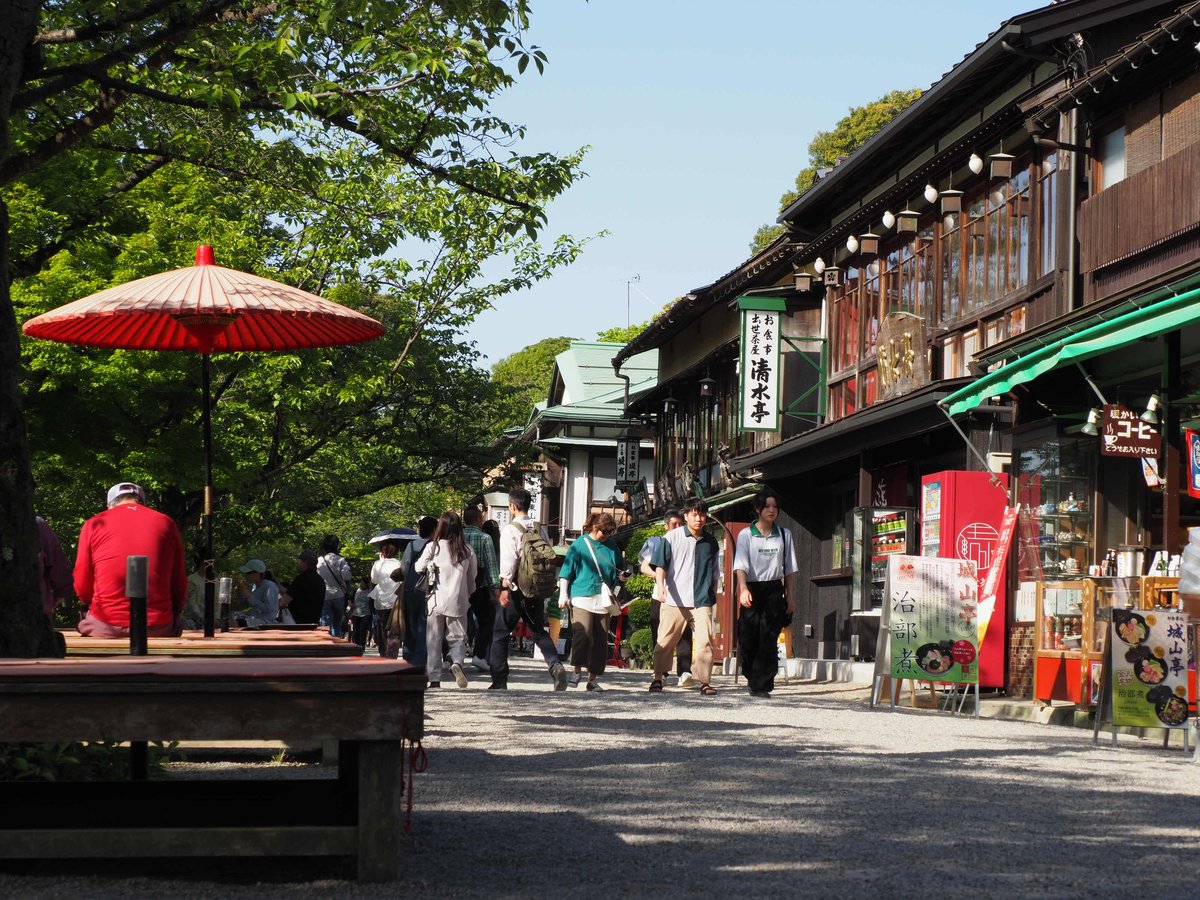
I took my time here and feel like I got some good shots.
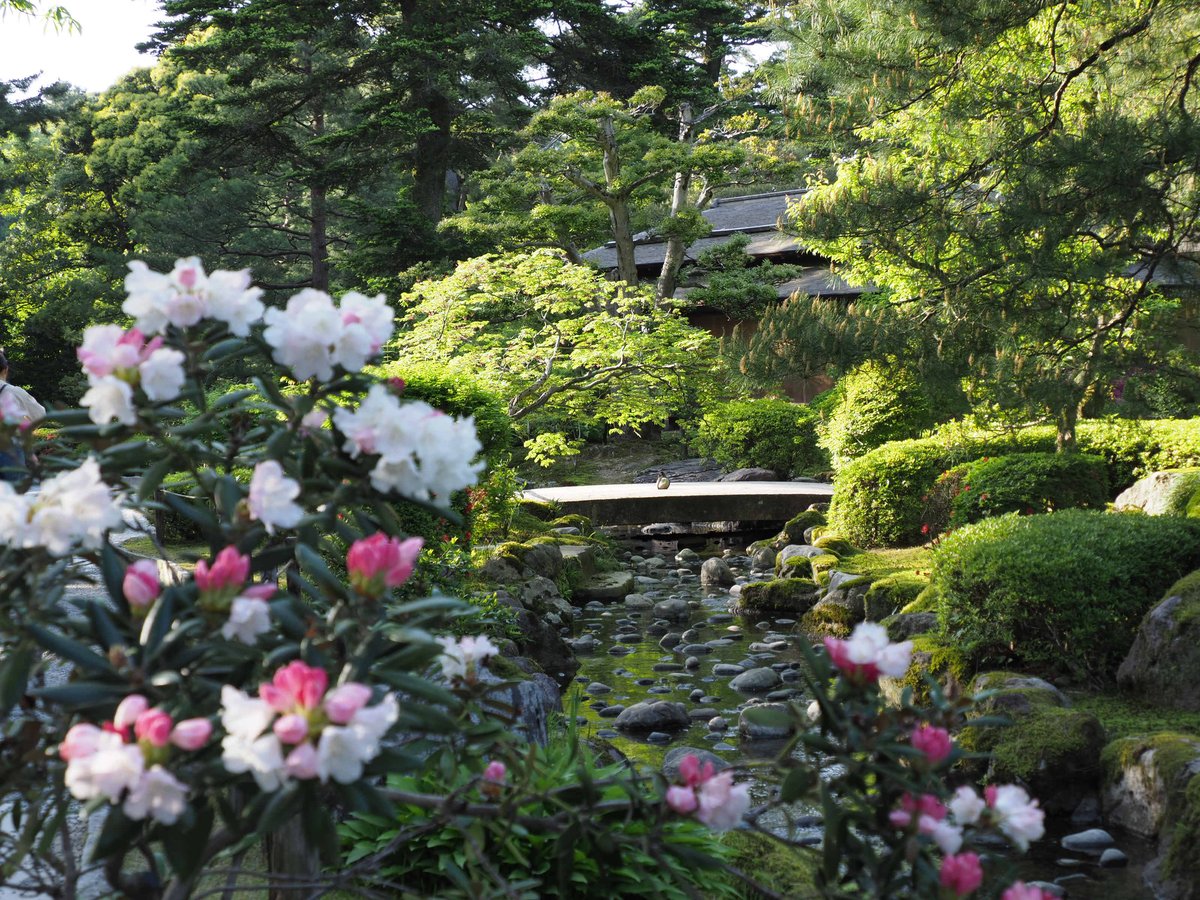
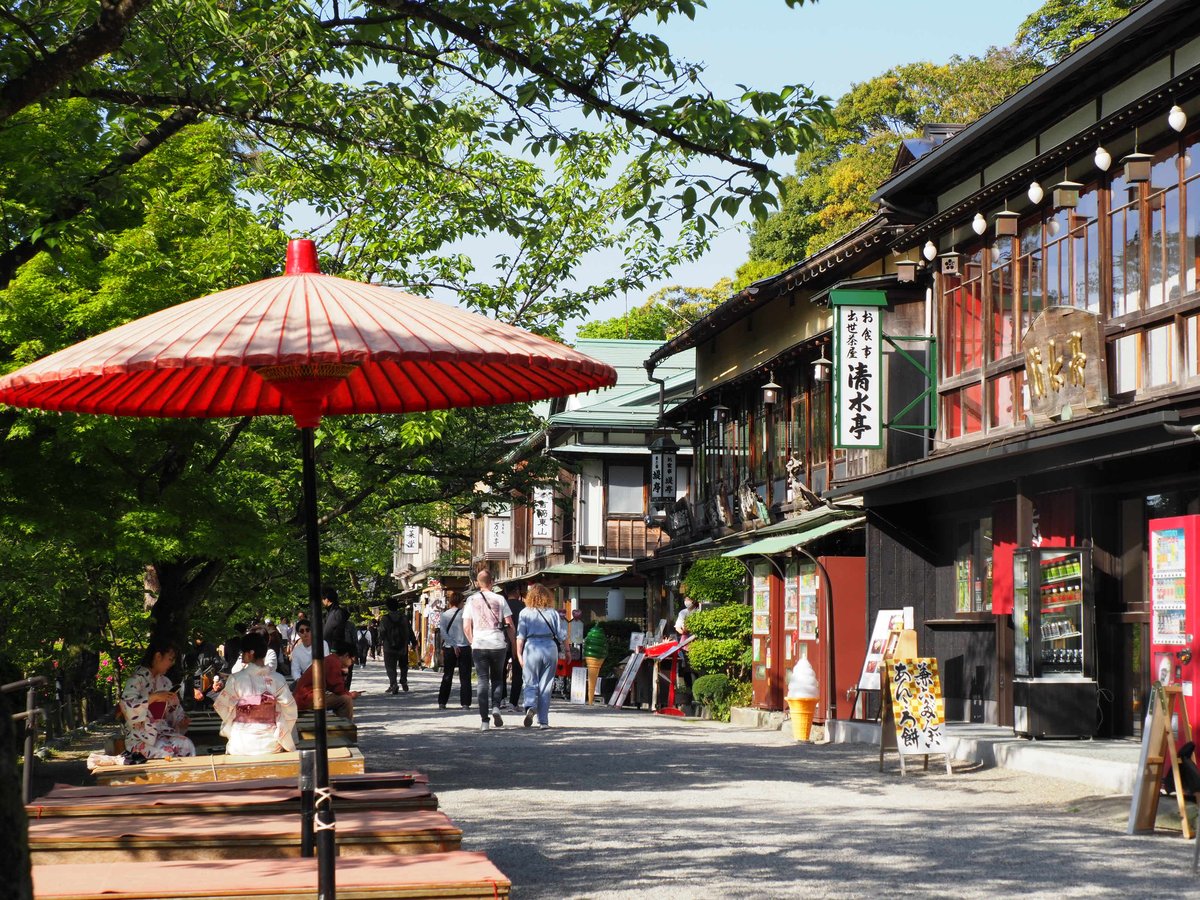 This is the Hisago-ike Pond inside Kenrokuen Garden.
On this small island surrounded by winding streams, items symbolizing the three major ceremonies of life — “birth,” “marriage,” and “death” — are said to be arranged.
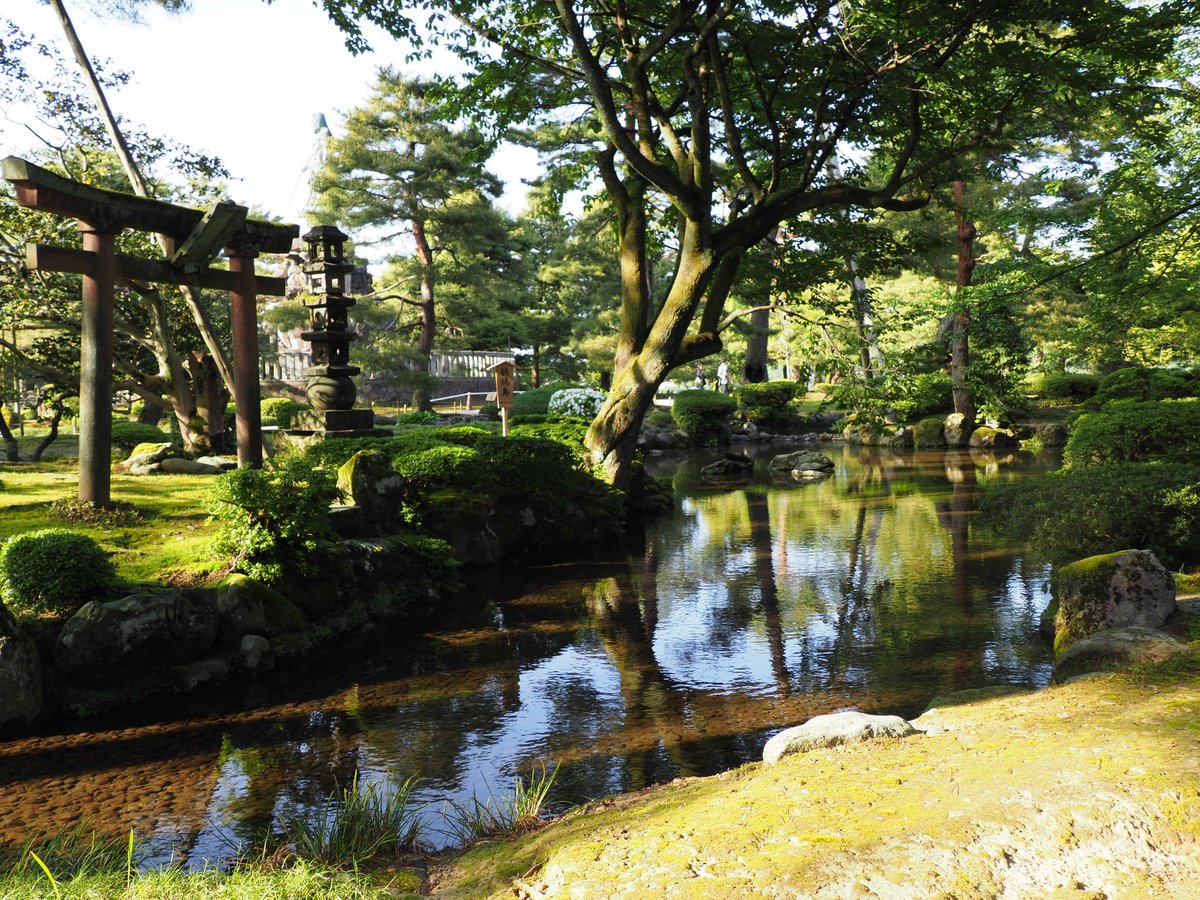 This is the kyokusui — the small winding stream that flows through the garden.
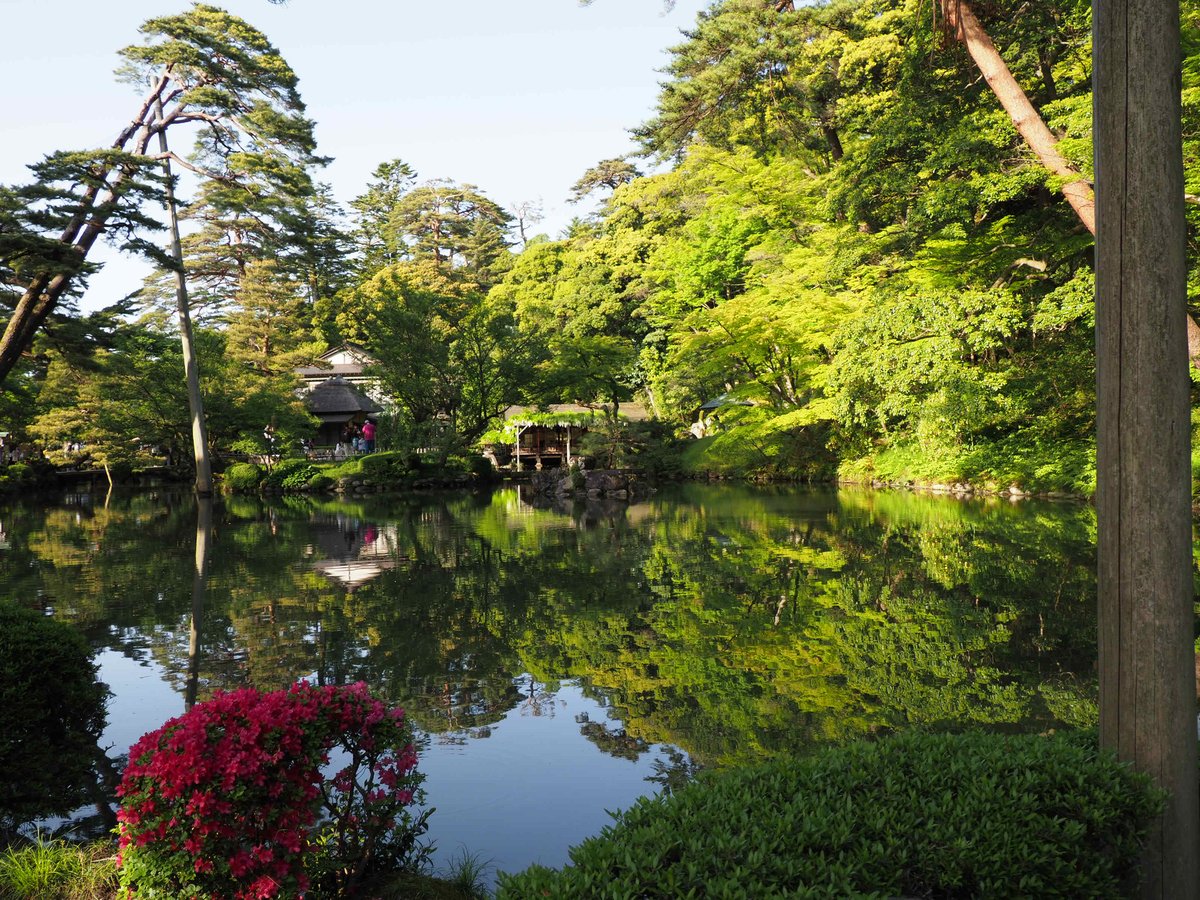
 The largest pond in Kenrokuen — Kasumiga-ike Pond.
It is located almost in the center of the garden.
 Fun Fact: Kenrokuen is one of Japan’s Three Great Gardens.
The other two are Kairakuen in Mito and Korakuen in Okayama.
The term “Three Great Gardens” has a nice ring to it.By the way, the name “Kenrokuen” comes from a passage in the Chinese Song-dynasty book Records of Famous Gardens in Luoyang (Rakuyō Meienki).
It lists the “Six Sublime Qualities” (rokushō) of an ideal garden, which are six contrasting landscapes that are difficult to achieve together:Kōdai (宏大): Magnificent spaciousness
Yūsui (幽邃): Secluded and profound depth
Jinriki (人力): Human ingenuity and craftsmanship
Sōko (蒼古): Ancient, weathered natural beauty
Suisen (水泉): Rich water features such as ponds, waterfalls, and streams
Chōbō (眺望): Distant and expansive views
The early May visit to Kenrokuen was stunning — the fresh green foliage was seriously beautiful.
There were about three different shades of green, and I wanted to photograph every single one.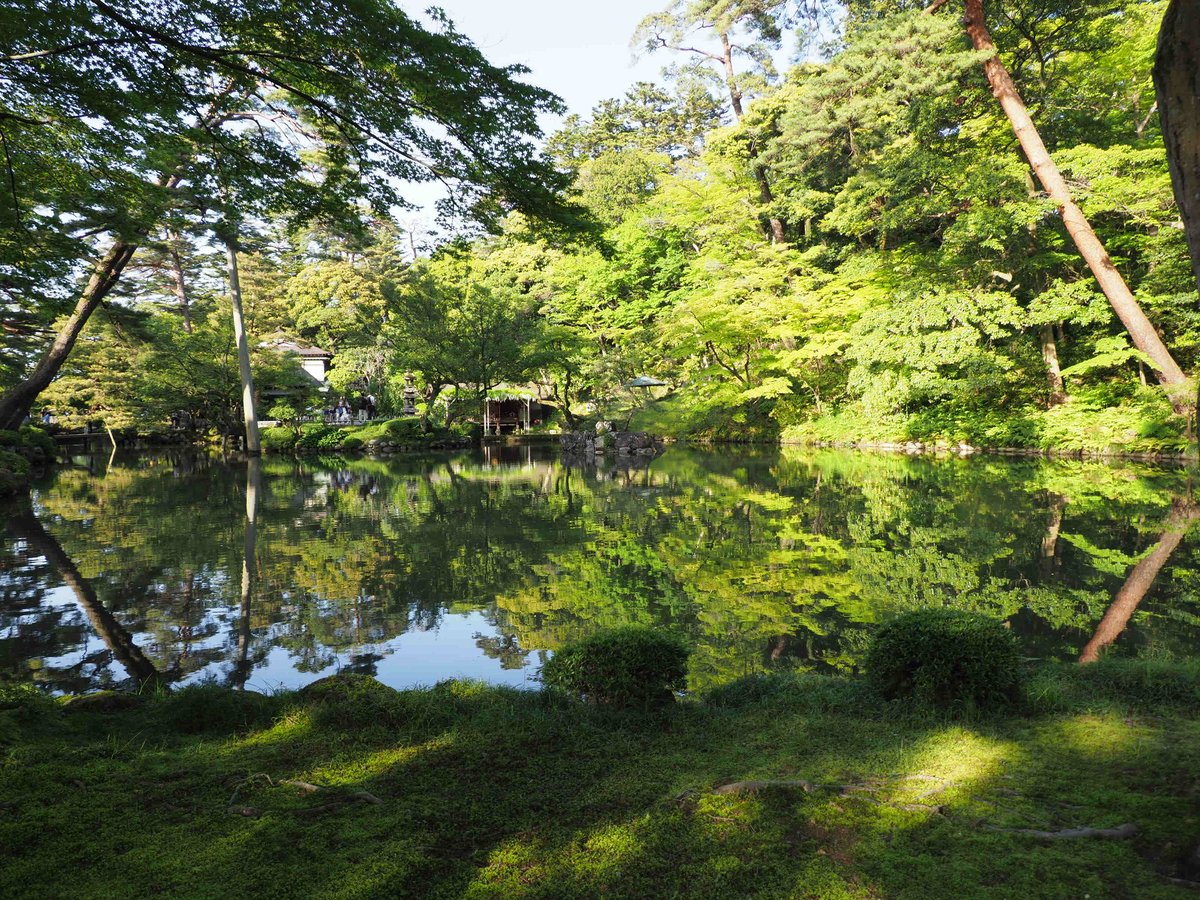
Summary: Kanazawa Castle & Kenrokuen Garden
Even though Kanazawa during Golden Week was more crowded than expected,
it was still much less crowded compared to the Tokyo metropolitan area or the Kansai region.
The fact that the castle and the garden are connected in about 30 seconds on foot is an amazing cost-performance!
Shooting Date: May 3, 2024
Location: Kanazawa City, Ishikawa Prefecture (Kanazawa Castle & Kenrokuen Garden)
Camera: OLYMPUS OM-D E-M1 Mark II + M.ZUIKO 12-200mm F3.5-6.3 / iPhone
Weather: Clear
High Temperature: 22.0℃
Low Temperature: 10.5℃
https://www.data.jma.go.jp/obd/stats/etrn/view/daily_s1.php?prec_no=56&block_no=47605&year=2024&month=5&day=&view=